What Is a Gas Detector and How Does It Work?
A gas detector is a safety instrument designed to detect the presence or concentration of specific gases in the surrounding atmosphere. Depending on the detector and sensor configuration, it can monitor combustible gases, toxic gases, oxygen levels, volatile organic compounds, or several gases at the same time.
The basic working principle is straightforward: gas reaches the sensing element, the sensor produces a measurable response, the detector converts that response into a gas concentration reading, and an alarm or connected monitoring system responds when the concentration reaches a preset threshold.
Gas detectors are widely used in oil and gas facilities, chemical plants, utilities, confined spaces, wastewater treatment, laboratories, marine environments and other workplaces where an unsafe atmosphere may develop.
What Is a Gas Detector?
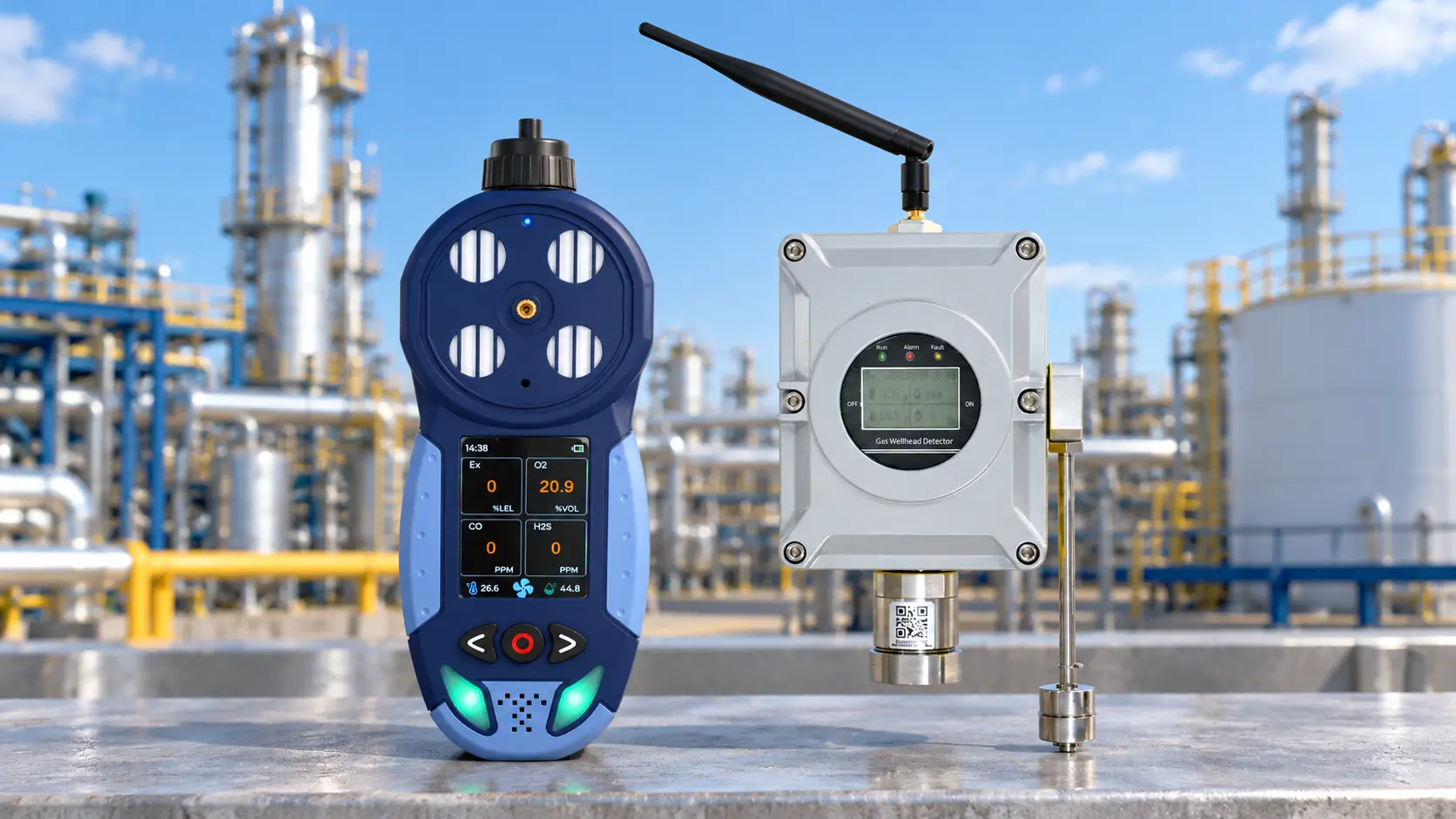
A gas detector is a direct-reading instrument used to identify and measure gases or vapors in the surrounding air. It can help workers and facility operators detect atmospheric conditions that may become hazardous before those conditions result in an incident.
Depending on the installed sensor, a gas detector may monitor combustible gases, oxygen deficiency or enrichment, toxic gases such as carbon monoxide and hydrogen sulfide, or other target gases relevant to the workplace.
Direct-reading instruments are useful because they provide measurement results at or near the time of sampling. The U.S. National Institute for Occupational Safety and Health explains that direct-reading and sensor technologies can be used to identify hazardous workplace conditions and support rapid warning when unsafe conditions develop. More information is available from the NIOSH Center for Direct Reading and Sensor Technologies.
How Does a Gas Detector Work?
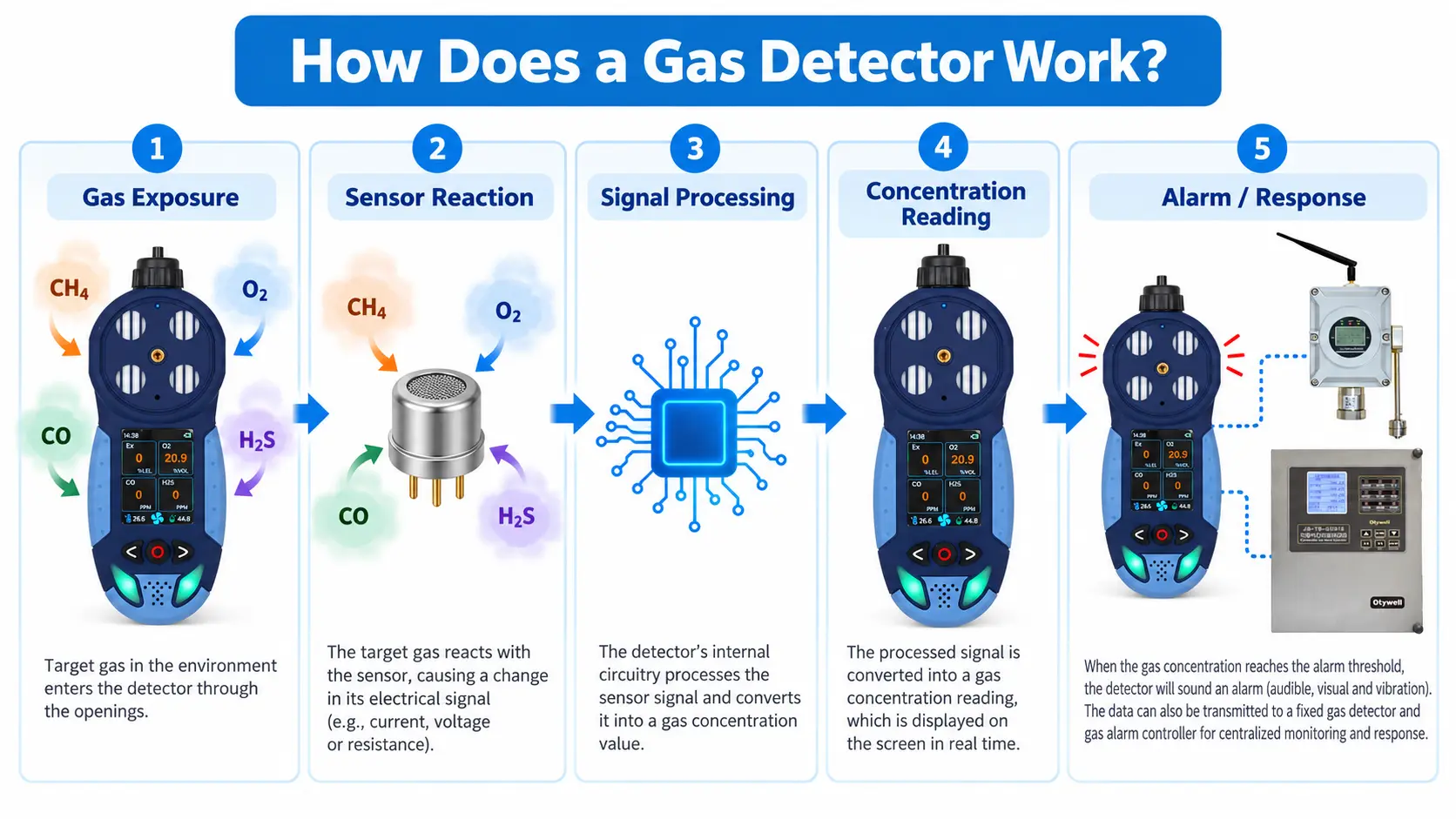
Different gas sensors use different physical or chemical principles, but most gas detection instruments follow the same basic process: exposure, sensing, signal processing, concentration measurement and alarm response.
1. Gas Reaches the Detector
The target gas must first reach the sensing area. A diffusion gas detector allows surrounding air to naturally reach the sensor through openings in the housing. A pump-suction detector actively draws an air sample into the instrument.
The correct sampling method depends on the application. Personal monitoring may use diffusion, while remote testing of tanks, pits, vessels or confined spaces may require pumped sampling.
2. The Sensor Reacts to the Target Gas
When the target gas reaches the sensing element, the sensor produces a measurable response. Depending on the sensing technology, that response may result from an electrochemical reaction, catalytic oxidation, infrared absorption or photoionization.
The magnitude of the sensor response is related to the concentration of the target gas in the atmosphere.
3. The Signal Is Processed
The detector electronics amplify, filter and process the sensor output. A microprocessor then converts the raw response into usable gas concentration data.
Calibration, sensor condition, environmental conditions and interfering gases can all influence measurement performance.
4. The Gas Concentration Is Displayed
The processed result is displayed on the detector or transmitted to a monitoring system. Depending on the gas and measurement range, common units include ppm, %Vol and %LEL.
5. The Detector Provides an Alarm or System Response
When the concentration reaches a configured alarm threshold, a portable gas detector can activate audible, visual and vibration alarms.
Fixed gas detectors can also transmit signals to a gas alarm controller for centralized monitoring, alarm indication and system management.
Common Gas Sensor Technologies
Electrochemical Sensors
Electrochemical sensors are commonly used for many toxic gases and oxygen measurements. The target gas reacts inside the sensing element and produces an electrical response that changes according to gas concentration.
This technology is widely used in industrial gas detection because it can provide sensitive measurements while operating with relatively low power consumption.
Catalytic Sensors
Catalytic sensors are commonly used for combustible gas detection. A combustible gas reacts on a heated catalytic element and produces a measurable change related to gas concentration.
Combustible gas measurements are commonly displayed as a percentage of the lower explosive limit, or %LEL.
Infrared Sensors
Infrared sensors measure the absorption of infrared energy by particular gas molecules. They can be used for gases such as hydrocarbons, methane or carbon dioxide depending on the detector and sensor configuration.
Infrared sensing is often suitable for continuous industrial monitoring where the target gas is compatible with the infrared measurement principle.
Photoionization Detection
Photoionization detection, commonly called PID, uses ultraviolet energy to ionize suitable compounds and measure the resulting electrical response.
PID technology is frequently used for volatile organic compound monitoring in industrial environments.
Related Otywell Gas Detection Products
The appropriate gas detector depends on the target gas, monitoring location and operating method. Portable detectors support personal and mobile monitoring, while fixed detectors and gas alarm controllers are designed for continuous or centralized gas monitoring.
|
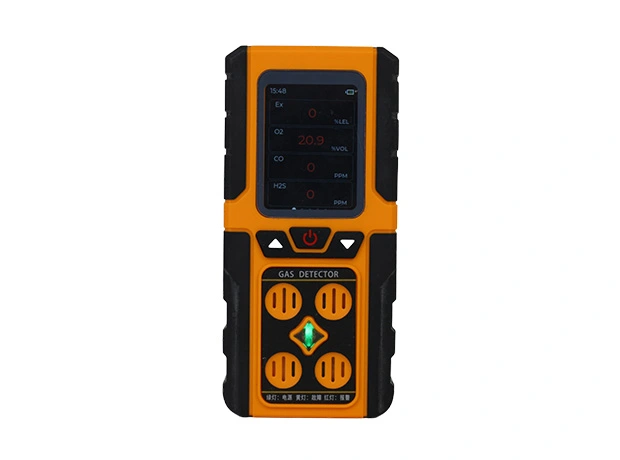
G40S Portable Multi-Gas DetectorThe G40S is a portable multi-gas detector for on-site monitoring of 1–5 selected gases. Common configurations can include CH4/LEL, O2, CO and H2S. It uses natural-diffusion sampling and provides audible, visual and vibration alarms. |
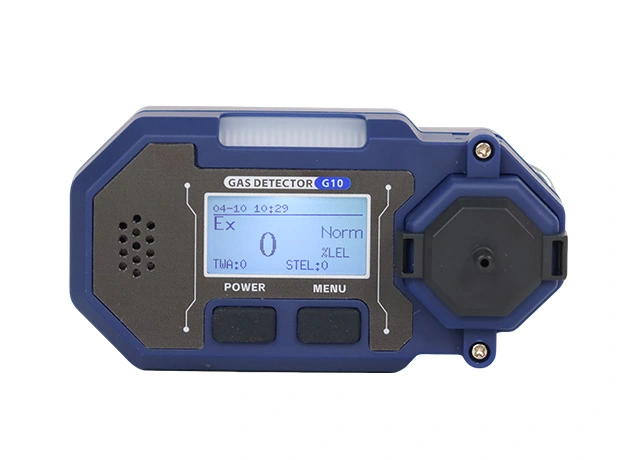
G10 Portable Gas DetectorThe G10 is a compact portable gas detection instrument designed for personal monitoring. It uses natural diffusion and can be configured for different target gases according to the selected sensor. |
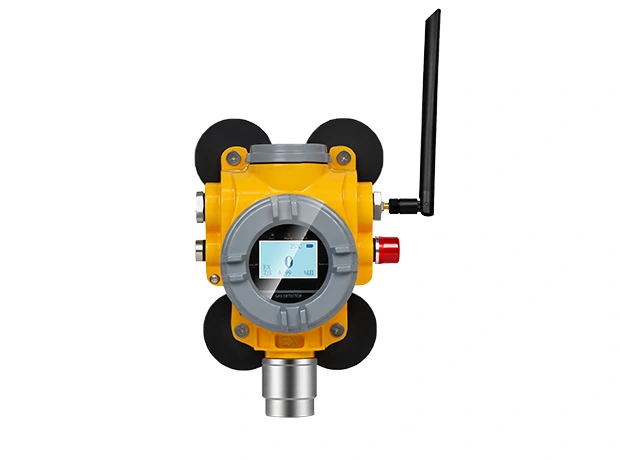
BTYQ-GYQ-TCB2 Fixed Gas DetectorThe BTYQ-GYQ-TCB2 is a battery-powered fixed detector designed for continuous combustible gas monitoring. It supports wireless data transmission options and magnetic installation for suitable applications. |
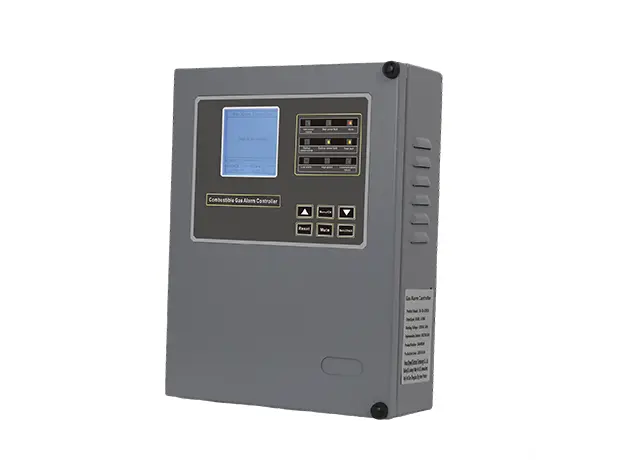
JB-TB-GDB18 Gas Alarm ControllerThe JB-TB-GDB18 is a multi-point gas alarm controller designed to integrate compatible detector signals for centralized monitoring, alarm indication and control management. |
Fixed Gas Detectors vs Portable Gas Detectors
Fixed and portable gas detectors perform related functions, but they are intended for different monitoring strategies.
Fixed Gas Detectors
A fixed gas detector is installed at a selected monitoring location and continuously measures the atmosphere around that point. Fixed detectors are commonly used around process equipment, pipelines, production areas, storage zones and other locations where continuous gas monitoring is required.
Detector placement should consider the target gas, potential release source, ventilation, equipment layout and site-specific risk assessment.
Portable Gas Detectors
A portable gas detector travels with the worker or is carried to the measurement location. Portable instruments are commonly used for personal protection, inspection, maintenance, temporary work and confined-space testing.
Portable multi-gas detectors are particularly useful when several atmospheric hazards may exist at the same time. Explore Otywell portable multi-gas detectors for mobile gas monitoring applications.
What Gases Can a Gas Detector Measure?
The gases a detector can measure depend on the installed sensor and selected configuration. Gas detector selection should therefore begin with the actual atmospheric hazard instead of simply choosing the instrument with the greatest number of sensors.
| Hazard Type | Examples | Common Measurement Unit |
|---|---|---|
| Combustible gases | Methane, propane, LPG and other combustible gases | %LEL |
| Toxic gases | H2S, CO, NH3, Cl2, SO2 and other toxic gases | ppm |
| Oxygen | Oxygen deficiency or enrichment | %Vol |
| Volatile organic compounds | Applicable industrial VOCs | ppm or ppb |
What Do PPM, %LEL and %Vol Mean?
PPM
PPM means parts per million. It is commonly used to express relatively low concentrations of toxic gases such as carbon monoxide and hydrogen sulfide.
%LEL
%LEL means percentage of the lower explosive limit. It is commonly used for combustible gas measurement.
The reading shows how the measured gas concentration relates to the lower concentration boundary at which a combustible gas-air mixture can become flammable under defined conditions.
%Vol
%Vol means percentage by volume. Oxygen concentration is commonly displayed in %Vol.
For U.S. general-industry permit-required confined spaces, OSHA identifies an atmosphere below 19.5% oxygen or above 23.5% oxygen as hazardous. OSHA also specifies atmospheric testing requirements for oxygen, combustible gases and vapors, and potential toxic contaminants. See OSHA 29 CFR 1910.146.
Where Are Gas Detectors Used?
Oil and Gas Facilities
Oil and gas production, processing, refining and storage facilities may contain combustible and toxic gas hazards. Portable detectors support workers performing inspection and maintenance, while fixed detectors provide continuous monitoring at selected locations.
Chemical and Petrochemical Plants
Chemical processes may involve combustible, toxic, corrosive or oxygen-displacing gases. Detector selection should consider the target gas, expected concentration, environmental conditions and installation requirements.
Confined Spaces
Tanks, pits, vessels, vaults and manholes can develop oxygen-deficient, combustible or toxic atmospheres. Portable gas detectors can be used for atmospheric testing before entry and continued monitoring when required by the site’s safety procedure.
Water and Wastewater Facilities
Wastewater treatment processes and underground infrastructure may involve hydrogen sulfide, methane, oxygen deficiency and other atmospheric hazards depending on the process and location.
Utility and Underground Monitoring
Utility vaults, valve wells, manholes and other underground infrastructure may require continuous or periodic monitoring. Depending on the application, the system may combine fixed detectors, wireless data transmission and centralized alarm management.
Marine and Offshore Operations
Engine rooms, tanks, cargo spaces and other enclosed locations may require atmospheric monitoring for combustible gases, oxygen and toxic gases.
How to Choose the Right Gas Detector
Selecting the correct gas detector should begin with the actual application rather than with a specific product model.
Identify the target gas. Determine which combustible, toxic or oxygen-related hazards may be present.
Determine how many gases must be measured. Some applications require a single-gas detector, while others require multiple sensors operating simultaneously.
Choose fixed or portable monitoring. Portable detectors are suitable for personal monitoring, inspection and temporary measurements. Fixed detection is appropriate where continuous area monitoring is required.
Select the sampling method. Natural diffusion is suitable for many personal and area-monitoring applications, while pumped sampling may be required when samples must be taken from a remote location.
Confirm the measurement range and sensor technology. The sensor must be compatible with both the target gas and expected concentration range.
Review the operating environment. Temperature, humidity, dust, water exposure, hazardous-area classification, power supply, communication method and installation location can all affect detector selection.
For continuous monitoring, explore Otywell fixed gas detection systems.
Gas Detector Calibration and Bump Testing
A gas detector can only provide useful protection when its sensor and alarm functions are operating correctly.
A bump test exposes a detector to a known gas to verify that the sensor responds and that its alarms operate. Calibration uses a known gas concentration to establish or adjust the relationship between sensor response and the concentration displayed by the instrument.
Sensor aging, contamination, blocked gas inlets, environmental exposure or incorrect calibration can affect measurement performance. Gas detector inspection, testing and calibration should therefore form part of a regular safety and maintenance program.
Frequently Asked Questions
What does a gas detector detect?
A gas detector measures a specific gas or group of gases according to the installed sensors. Depending on the configuration, it may detect combustible gases, oxygen, toxic gases or volatile organic compounds.
How does a gas detector sense gas?
Gas reaches a sensing element that produces a physical or chemical response. Detector electronics process this response and convert it into a gas concentration reading.
What is a multi-gas detector?
A multi-gas detector contains multiple sensing channels so that several atmospheric hazards can be monitored at the same time. The exact gas combination depends on the instrument and selected sensor configuration.
What is the difference between a fixed and portable gas detector?
A fixed detector remains installed at a selected monitoring point for continuous measurement. A portable detector is carried by a worker or moved between locations for personal monitoring, inspection or temporary testing.
How often should a gas detector be calibrated?
Calibration frequency depends on the detector, sensor technology, operating environment, applicable requirements and manufacturer instructions. Maintenance should follow the documentation for the exact detector configuration.
Can one gas detector measure every gas?
No. Different gases require compatible sensors, measurement ranges and sensing technologies. The detector must be selected and configured for the hazards that may actually be present.
Conclusion
A gas detector is part of a complete safety process that begins with identifying the atmospheric hazard and selecting the correct sensing technology, sampling method and monitoring strategy.
Portable gas detectors support workers and mobile inspections, while fixed gas detectors continuously monitor selected areas. Gas alarm controllers can bring multiple detector signals together for centralized alarm indication and management.
When selecting a gas detector, consider the target gas, concentration range, sampling method, operating environment, alarm requirements and communication needs. The detector configuration should always match the real application rather than relying on a one-size-fits-all solution.