
Oxygen Deficiency Monitor Selection for Industrial Inert-Gas Areas
An oxygen reading tells you what is in the air at the sensor. Choosing a monitor starts with a different question: where could oxygen be displaced, and who needs to be warned if it is?
Choose an oxygen deficiency monitor by mapping the inert-gas source, occupied positions and air movement; then decide whether the job needs a fixed point, a portable instrument or both. Specify the O₂ range, sensor location, alarm recipients, power and testing method for each point. The monitor measures oxygen concentration. A falling reading alone does not identify which gas caused it.
- Locate the gas source
- Map occupied areas
- Choose fixed or portable use
- Define alarms and outputs
- Plan testing and access
What does an oxygen deficiency monitor actually detect?
An oxygen deficiency monitor measures the oxygen concentration in the atmosphere at its sensing point, usually as a percentage by volume. In normal air near sea level, that figure is roughly 20.9%. If nitrogen, argon or helium is released into a room, it can displace air and lower the oxygen concentration. Oxygen may also be consumed by a process. The monitor reports the resulting O₂ level; it does not name the gas responsible for the change.
That distinction affects equipment selection. A low-O₂ alarm may be the right warning for an area using an inert gas, but another substance may create a separate hazard before oxygen falls enough to trigger that alarm. If a process also involves a toxic or combustible gas, specify any direct gas measurement needed for that substance. Do not treat one oxygen channel as a universal leak detector.
In the United States, OSHA’s respiratory protection standard defines an oxygen-deficient atmosphere as one containing less than 19.5% oxygen by volume. The OSHA definition gives context for that threshold. Alarm settings, warning stages and any high-oxygen alarm still have to be set for the applicable work and the specified equipment. A manufacturer’s preset is not a substitute for recording what the site expects each alarm to do.
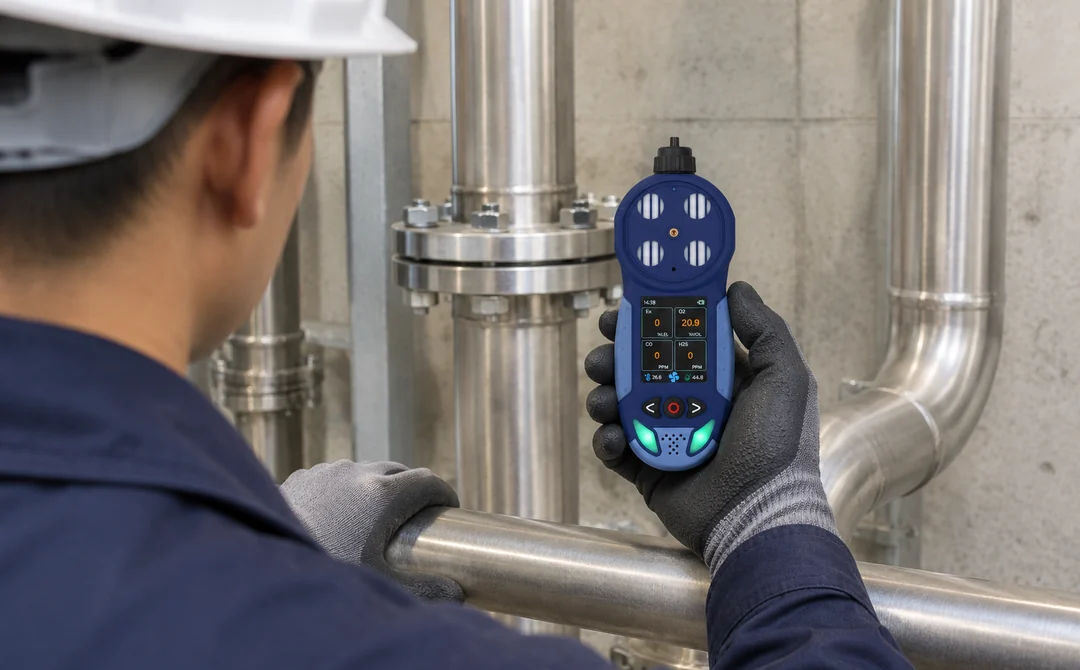
Decide whether the task needs fixed, portable or both
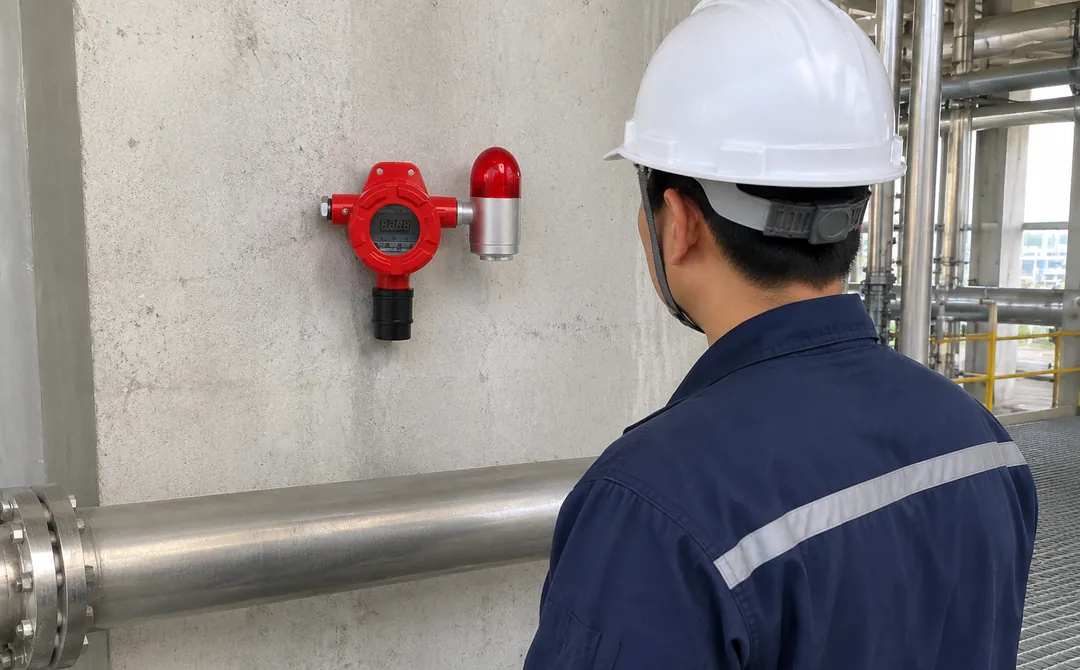
Fixed monitoring watches a defined place
A fixed oxygen monitor measures at its installed sensor or sampling point, including when nobody is holding an instrument. That makes it useful where a credible release could affect a room during storage, transfer or routine operation: a nitrogen manifold, a cryogenic liquid filling area or an inert-gas storage room, for example. It also provides a place to connect a local warning or a building control signal if the selected version supports it.
The word fixed does not imply whole-room coverage. A sensor mounted near one manifold may not represent air behind a partition, near another source or along a worker’s route. Record each proposed point against a release source and occupied position before deciding how many monitors are needed.
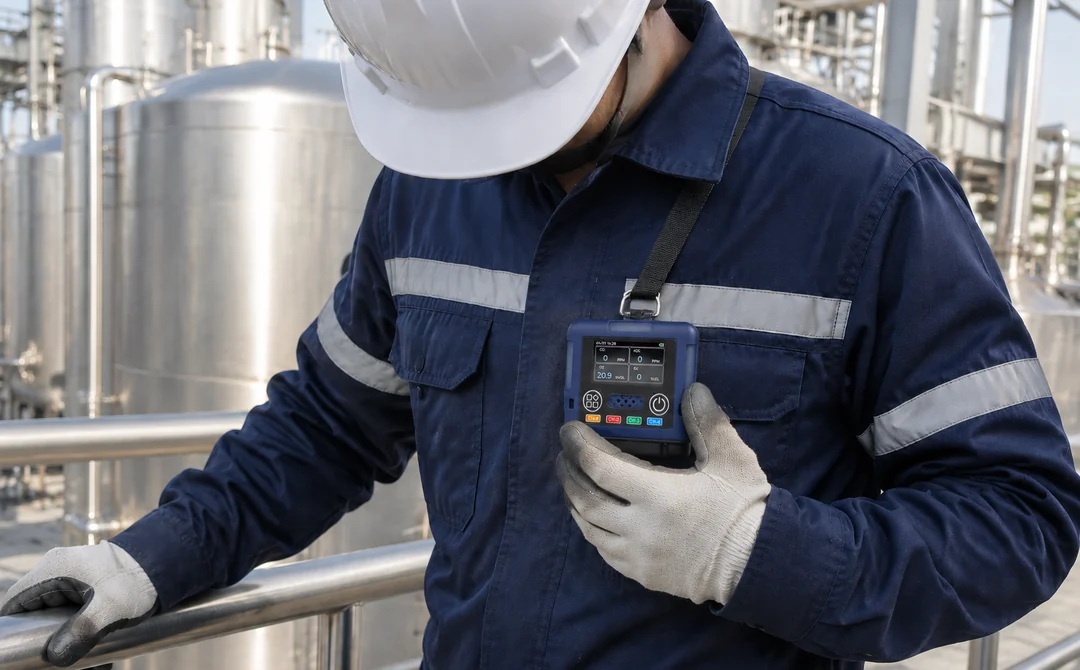
Portable monitoring travels with the task
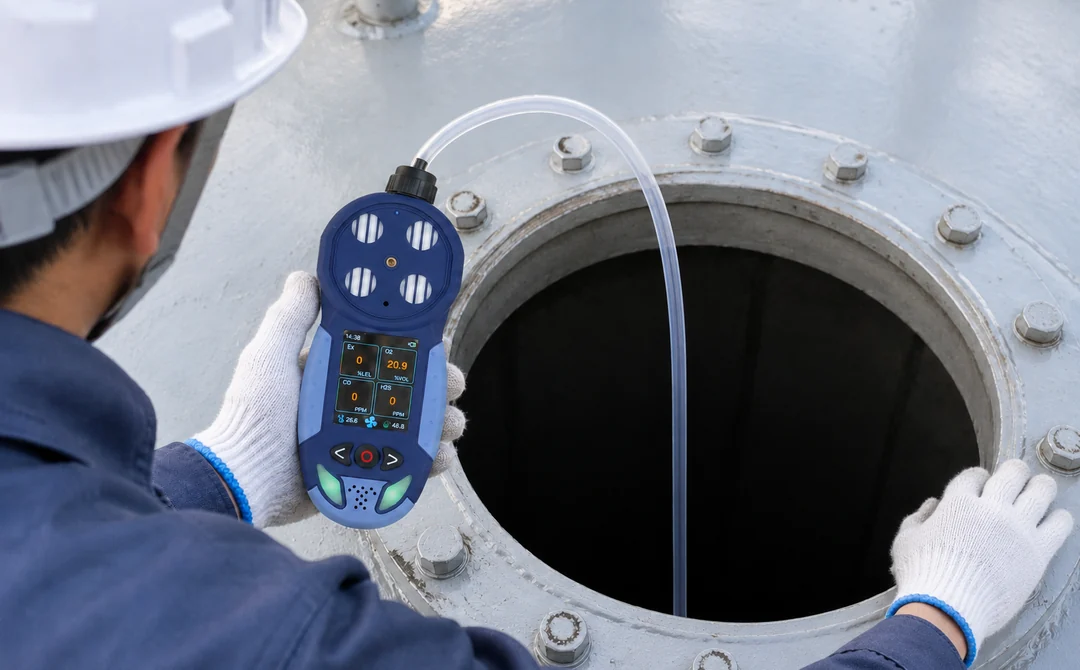
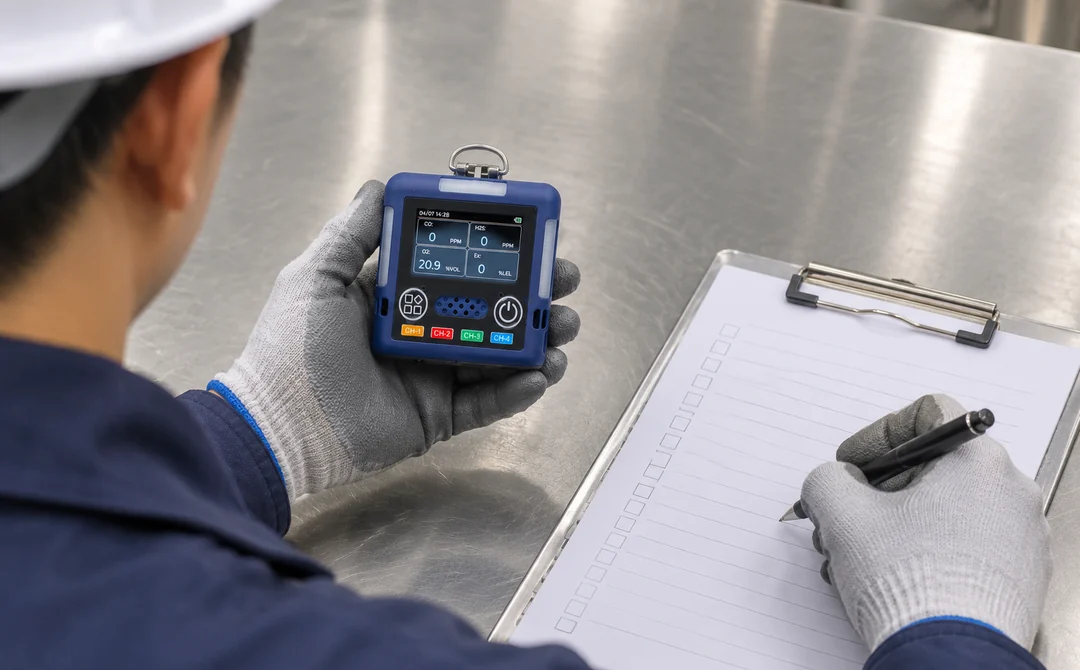
A portable detector measures air at its inlet as a worker moves or checks a particular location. It can be useful for a changing work area, an inspection route or a pre-task atmosphere check. A pumped version can draw a sample from a point away from the operator; if tubing or a probe is fitted, the sample must travel through that path before reaching the sensor. A diffusion version measures air around the instrument. Choose the sampling version for the actual task rather than assuming the two versions are identical.
Many sites need both roles. A fixed system can watch a known source continuously, while a portable instrument follows a worker through areas beyond that point. Conversely, a portable reading taken during one visit does not continue to watch the room after the person leaves.
| Task | Fixed monitor | Portable detector | What to check |
|---|---|---|---|
| Continuous watch near a gas source | Measures at a defined installed point | Useful for periodic inspection | Release points, occupied positions and alarm recipients |
| Moving worker or changing job site | Covers only its installed location | Travels with the worker | Inlet position, operating time and fitted channels |
| Remote sample before approaching an area | May use an appropriate remote sampling setup | Pumped configuration may be suitable | Probe, tubing, flow and total response delay |
| Several separated sources | May need more than one point | Supports task-specific checks | Room layout and whether any point is missed |
When a request says only “we need an oxygen alarm,” ask for the gas source, room plan, work positions and monitoring hours before selecting a model. Those details decide whether the required device is an area monitor, a portable meter or a combination.
Locate the measurement point and the alarm
Begin at likely releases and occupied positions
Mark cylinders, manifolds, regulators, transfer connections, vents and process equipment where an inert gas could be released. Mark doors, normal workstations and routes to the equipment. A useful sensor position measures air that could reach people or provides timely warning at a credible release point. These may be different positions, particularly in a large or divided room.
Airflow changes the picture. Supply air can dilute a sample near a vent; a door or partition can separate the detector from a pocket of low-oxygen air. A cold release from a cryogenic system may initially behave differently from the same gas at room temperature. Gas density belongs in the analysis, but it does not establish one universal mounting height or coverage radius. The NIH oxygen-monitoring protocol calls for considering release locations, gas behavior, breathing-zone conditions, display access and any sample-line fittings.
Put the warning where it will be noticed
The sensor, display and alarm need not all be in the same place. If an instrument is mounted by a source but a person can enter before seeing it, consider how the alarm will be visible or audible at the entrance. Record whether a local warning is sufficient or whether the site needs an external beacon, control-room indication or ventilation interface. For any remote output, confirm the selected detector signal and the receiving system’s input as a compatible pair.
Decide what happens when power or communication is lost. If a remote display is planned, confirm where the actual sensor remains and whether the proposed cable or sample line is allowed for that version. Leave physical access for inspection and testing. A point that cannot be reached for service becomes a recurring maintenance problem.
| Point record | Information to enter | Reason |
|---|---|---|
| Possible release | Gas, source and operating task | Defines what the point must watch |
| People | Workstation, access door and travel route | Shows where a warning is needed |
| Air movement | Ventilation, doors, partitions and cold release conditions | Tests whether the sample is representative |
| Sensor and display | Proposed sensing point and readable location | Separates measurement from user interface |
| Alarm path | Local warning, remote recipient and failure indication | Connects the reading to an action |
| Access | Testing and replacement route | Keeps the point serviceable |
There is no reliable monitor count based only on square footage. For several sources or an obstructed layout, draw the points on the actual floor plan and examine the air routes between each source and occupied area.
Specify the monitor, sensor and signal path
Check range and response on the complete device
Confirm that the ordered configuration displays oxygen in %vol over the range needed for the monitoring task. Review resolution and response time under the stated test conditions. A sensor-cell T90 figure may differ from the time needed for a complete installation to show a change: a protective cover, remote probe or sample line adds its own path. If a pumped arrangement is proposed, include tubing, flow, blockage indication and the travel time in the specification request.
Compare the sensor as part of a detector
Oxygen sensor designs have different operating and service requirements. Compare the specified cell, the detector enclosure, expected temperature and humidity, calibration instructions and replacement procedure. A stated sensor life belongs to a particular design and set of conditions; it is not a service interval for every oxygen monitor. If a bare sensing element is being ordered, verify mechanical dimensions, output and electrical load against its host detector before treating it as a replacement part.
Define alarms, power and receiving systems
Write down the alarm stages and who receives each one. Check local sound and light indications, any relay or analog output, controller compatibility, power supply and fault reporting. An enclosure rating and a hazardous-area approval answer different questions; confirm each against the exact supplied version where either matters. The same applies to optional battery backup or remote communications: a feature listed for a product family may depend on the ordered configuration.
| Specification field | Needed from the site | Needed from the supplier |
|---|---|---|
| Measurement | O₂ range, unit and alarm purpose | Fitted sensor range, resolution and response conditions |
| Sampling | Diffusion point or remote sample location | Allowed probe/tube arrangement and total response |
| Environment | Temperature, moisture, cleaning and enclosure conditions | Limits of the complete ordered device |
| Signal | Alarm recipients and controller inputs | Selected outputs, fault indication and power options |
| Service | Access and recordkeeping needs | Test gas, calibration and sensor replacement instructions |
If the page for a proposed device does not identify its O₂ configuration, alarm output or environmental limits, request the exact version’s documentation before finalizing the point schedule. A general list of available gases does not confirm what one unit will measure.
Otywell equipment for different O₂ monitoring roles
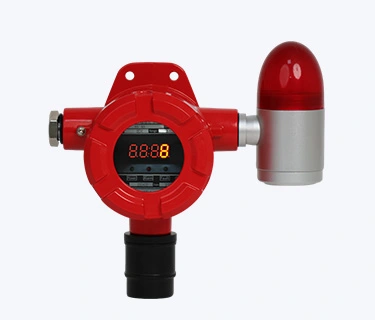
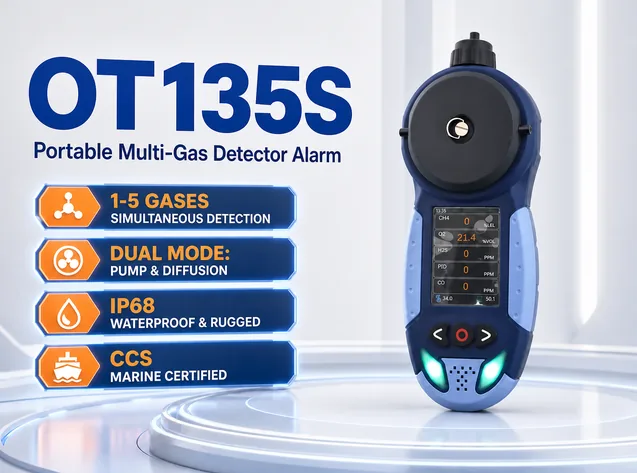
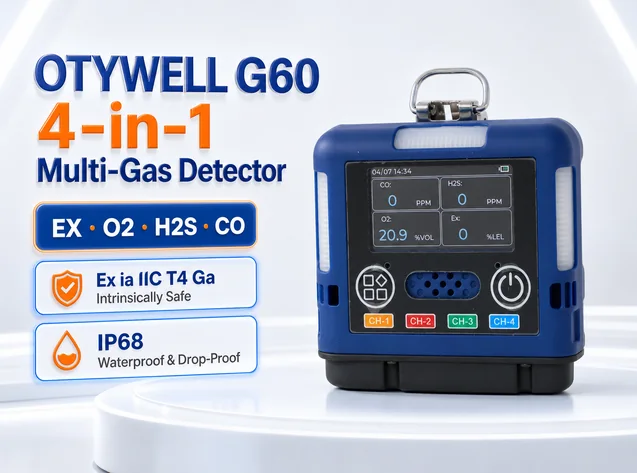
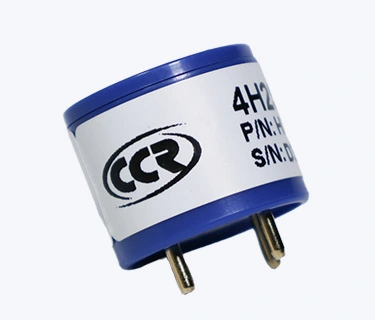
Select the complete detector for the monitoring task, then confirm its fitted O₂ sensor and ordered options. The fourth item below is a component for a compatible detector, not a room monitor on its own.
Commission, test and keep the point usable
Commissioning should demonstrate more than a number on the display. Identify the installed sensor and configuration, verify that the reading reaches the correct display or controller, and check that each intended alarm recipient receives the right signal. Where a ventilation interface or backup power is part of the installation, verify those functions as part of the agreed alarm chain. Record the as-installed settings so a later replacement can be checked against the same point specification.
Plan how gas will reach the sensor during a response test. A blocked inlet, damaged guard or contaminated sample line can impair measurement even if the electronics appear normal. For a sampled system, inspect the tubing and fittings as well as the instrument. Keep the display, sensor and alarm devices accessible for checks. Follow the actual device’s test, calibration and replacement instructions; service intervals cannot be copied from another sensor technology or product family.
The point schedule should retain each detector model and version, fitted sensor, O₂ range, location, alarm settings, power source, signal destination, test method and responsible record. This turns a set of instruments into a system that can be checked after installation and maintained as rooms or processes change.
Send a useful oxygen-monitoring specification
Provide the inert gas and its storage or transfer points, a floor plan with ventilation and occupied positions, the need for fixed or portable monitoring, O₂ range, alarm recipients, power and controller inputs, and the number of proposed points. If a sensor must fit an existing detector, include that detector’s exact model and revision. The Otywell O₂ equipment range is a starting point for matching those details to an available configuration.
Frequently asked questions
Does an oxygen deficiency monitor identify a nitrogen leak?
It reports the oxygen concentration at its sensing point. A drop can indicate that air has been displaced, but that reading does not identify nitrogen or another specific gas. Use a separate measurement when the process requires identification or measurement of that gas.
When do I need fixed monitoring instead of a portable meter?
Use fixed monitoring when a defined area must be watched continuously. A portable meter follows a person or a particular check. A site may use both when it needs continuous coverage near a source and measurements along a worker’s route.
Where should an O₂ sensor be placed near liquid nitrogen?
Start with the likely release point, occupied positions, room layout and ventilation. A cold release may initially move differently from room-temperature gas. Set the sensing point where it can measure a developing change relevant to people; do not choose a height from gas density alone.
Can one monitor cover a large room with several gas sources?
One point measures air at that point. Several separated sources, partitions or airflow paths may call for additional points. Work from a floor plan rather than a universal square-footage allowance.
What O₂ range and response time should I request?
Specify oxygen in %vol and the range needed for the task, then ask for resolution and response data for the ordered detector. If a remote probe or sample line is used, include its effect on total response time.
Is a long-life oxygen sensor maintenance-free?
A service-life claim applies to a particular sensor under stated conditions. The complete monitor still needs the checks, calibration or adjustment, cleaning and replacement procedures given for its actual version.
Can a multi-gas detector’s O₂ channel replace a fixed room monitor?
A portable O₂ channel measures air at its inlet while the instrument is present. A fixed monitor watches its selected point continuously. Choose by the time and location that must be covered; both may be useful for the same operation.