Water Treatment Chemical Room Gas Monitoring Solution
A water treatment plant may use chlorine, chlorine dioxide, ozone, ammonia or sulfur dioxide in separate parts of the process. Each chemical creates a different gas detection task. A detector selected only because it is labelled for water treatment may not measure the gas used at the site.
Otywell combines gas-specific fixed detectors, a central alarm controller, pump-sampled inspection equipment and personal monitors. The system watches the chemical source continuously, warns people outside the affected room and gives technicians the right instrument for inspection or maintenance.
- Continuous monitoring around chemical storage and feed equipment
- Gas-specific sensing for the actual treatment chemical
- Alarm indication outside the room and in the control area
- Configurable signals for ventilation and approved isolation functions
- Pumped remote sampling before a technician approaches the suspected leak
- Personal monitoring during cylinder handling and maintenance
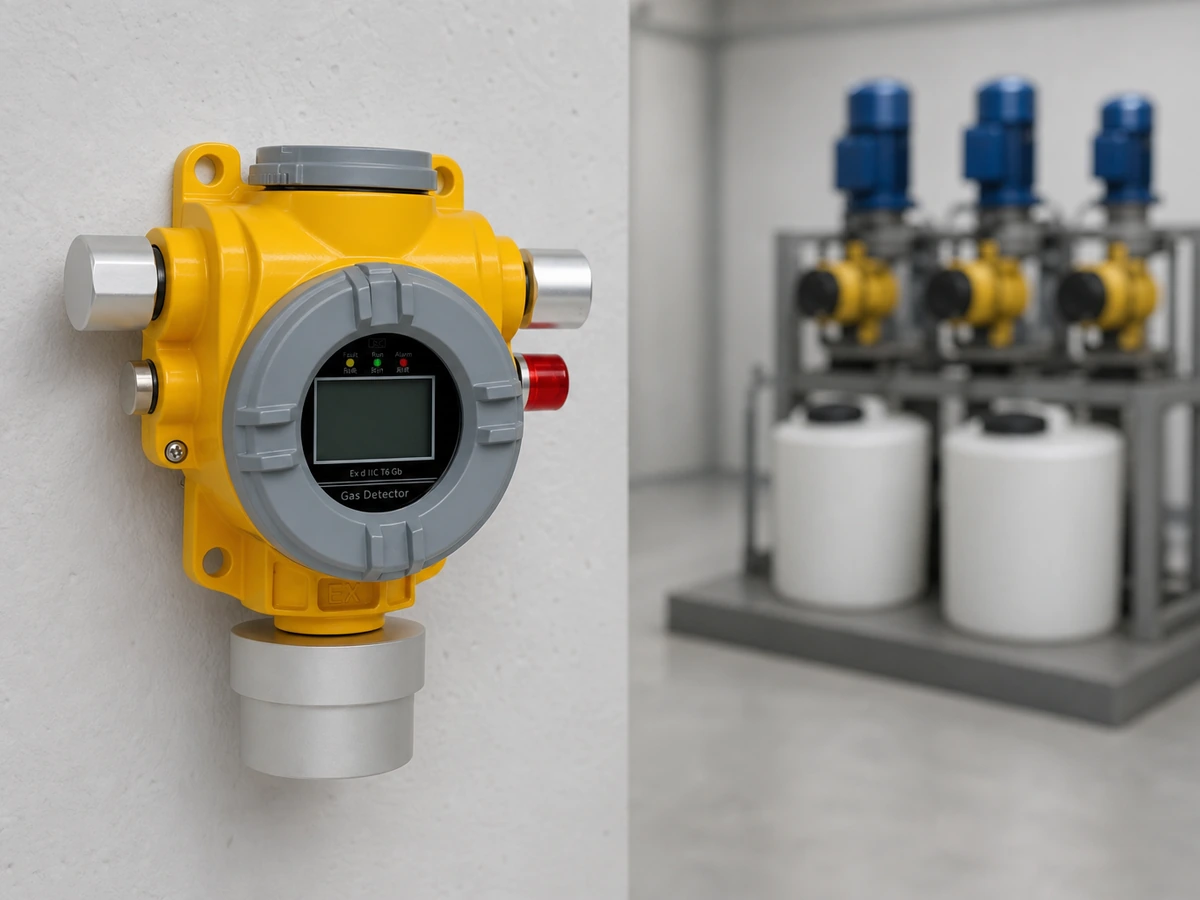
A layered gas monitoring system for chemical storage, dosing equipment and adjacent work areas.
Start with the treatment process
The room name does not define the gas hazard
Water utilities disinfect and condition water in different ways. One plant may store chlorine cylinders. Another may generate chlorine dioxide on site from precursor chemicals. A third may use ozone generators or ammonia for chloramination. These systems should not receive the same detector configuration simply because they are all called disinfection rooms.
The first design step is a chemical inventory linked to equipment and location. Record what is stored, what is generated, where gas could escape and whether the process can continue to release gas after an alarm. Review cylinders, ton containers, valves, regulators, evaporators, injectors, flexible connections, generator skids, chemical feed pumps and ventilation ducting.
Gas detection also has limits. It does not replace containment, ventilation, chemical isolation, emergency response or safe operating procedures. Its job is to identify a defined airborne hazard early enough for the site response to begin.
Monitoring zones
Divide the plant by chemical source and response area
Separating the building into monitoring zones makes alarms easier to interpret. The operator should know whether an alarm comes from a cylinder connection, a generation skid, the occupied work area or an adjacent room.
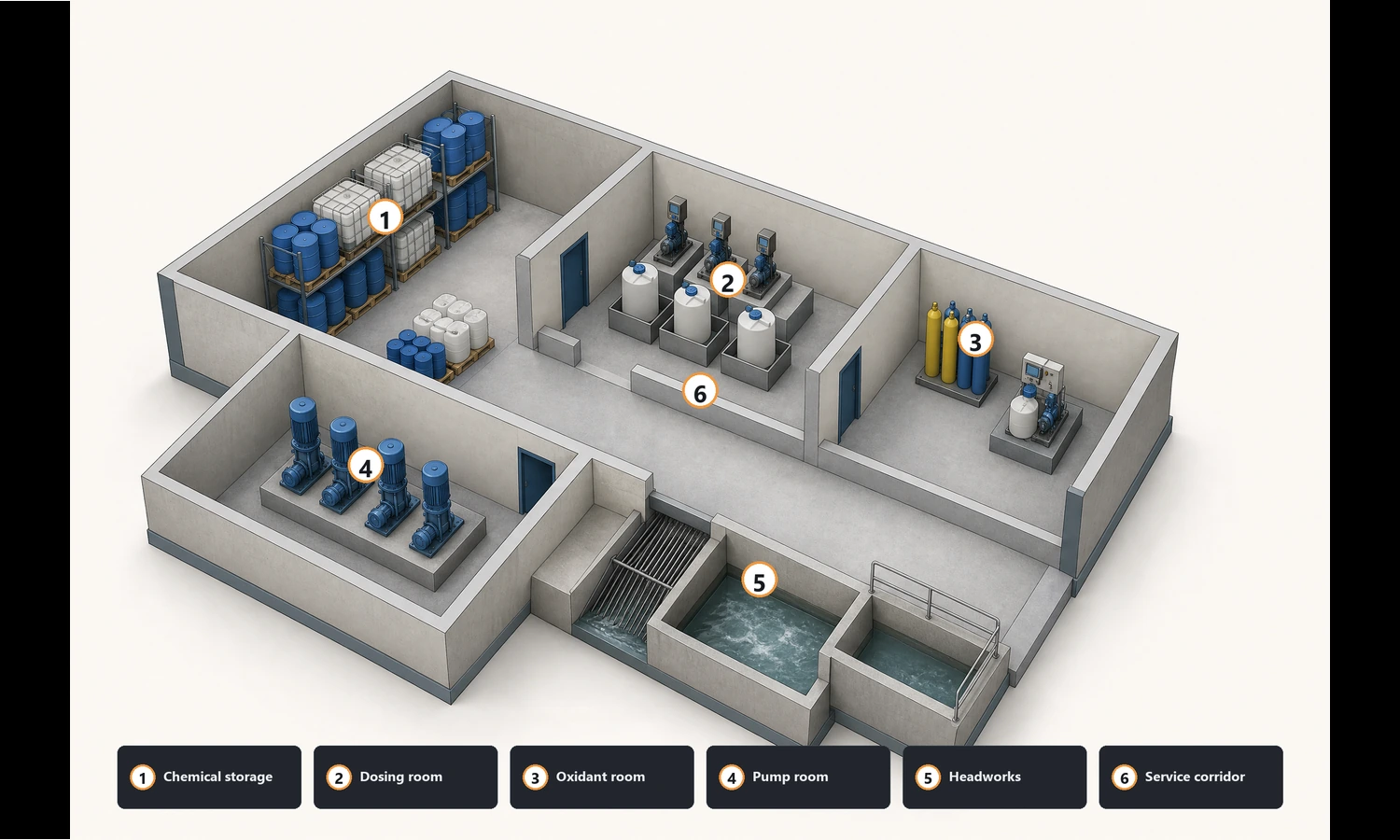
Typical monitoring zones from bulk storage and generation equipment to the room entrance and control area.
| Area | Possible release source | Monitoring purpose | Suggested detection layer |
| Chlorine storage and feed room | Cylinder valve, manifold, regulator, evaporator or injector connection | Detect chlorine near the equipment and warn staff before entry | Fixed Cl2 detector, external alarm indication and controller |
| Chlorine dioxide generator room | Generator skid, reaction system, transfer line or ventilation failure | Detect ClO2 in the room and at selected equipment points | Gas-specific fixed detector and portable confirmation instrument |
| Ozone generator room | Generator, contactor connection, destruct unit or off-gas line | Identify ozone escaping into the occupied room | Fixed O3 detector with alarm and ventilation interface |
| Ammonia feed room | Cylinder, storage vessel, regulator or dosing connection | Monitor NH3 around the source and the operator’s work position | Fixed NH3 detector plus task-specific personal monitoring |
| Sulfur dioxide room | Cylinder valve, manifold, evaporator or feed equipment | Detect SO2 leakage before it reaches adjacent occupied areas | Fixed SO2 detector, external warning and controller |
| Inspection and maintenance route | Unknown point within the alarmed zone | Sample from a safer position and protect the technician during the task | OT135 pump sampling and G40S personal monitoring |
System architecture
Use four detection layers with separate responsibilities
Fixed gas detection
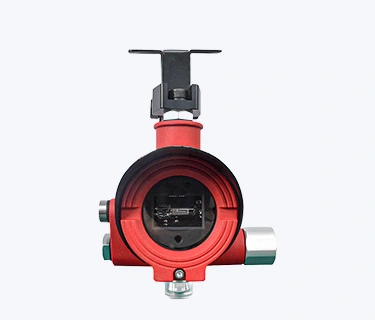
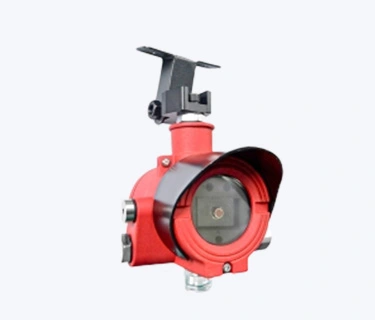
TCB2-F detectors continuously monitor the specified gas around storage, generation and dosing equipment.
Alarm control
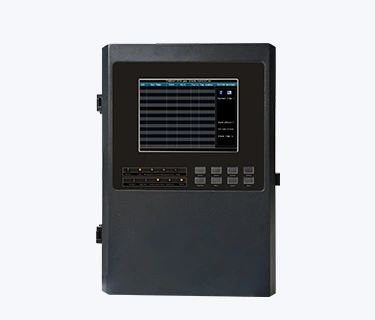
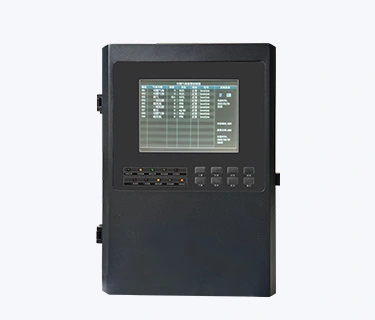
The GDB15 receives compatible RS485 detector signals, stores alarm and fault records, and provides configured outputs for a compact installation.
Pumped inspection
The OT135 draws a remote sample through tubing or a probe before the technician moves closer.
Personal monitoring
The G40S follows the worker and monitors the breathing zone during defined tasks.
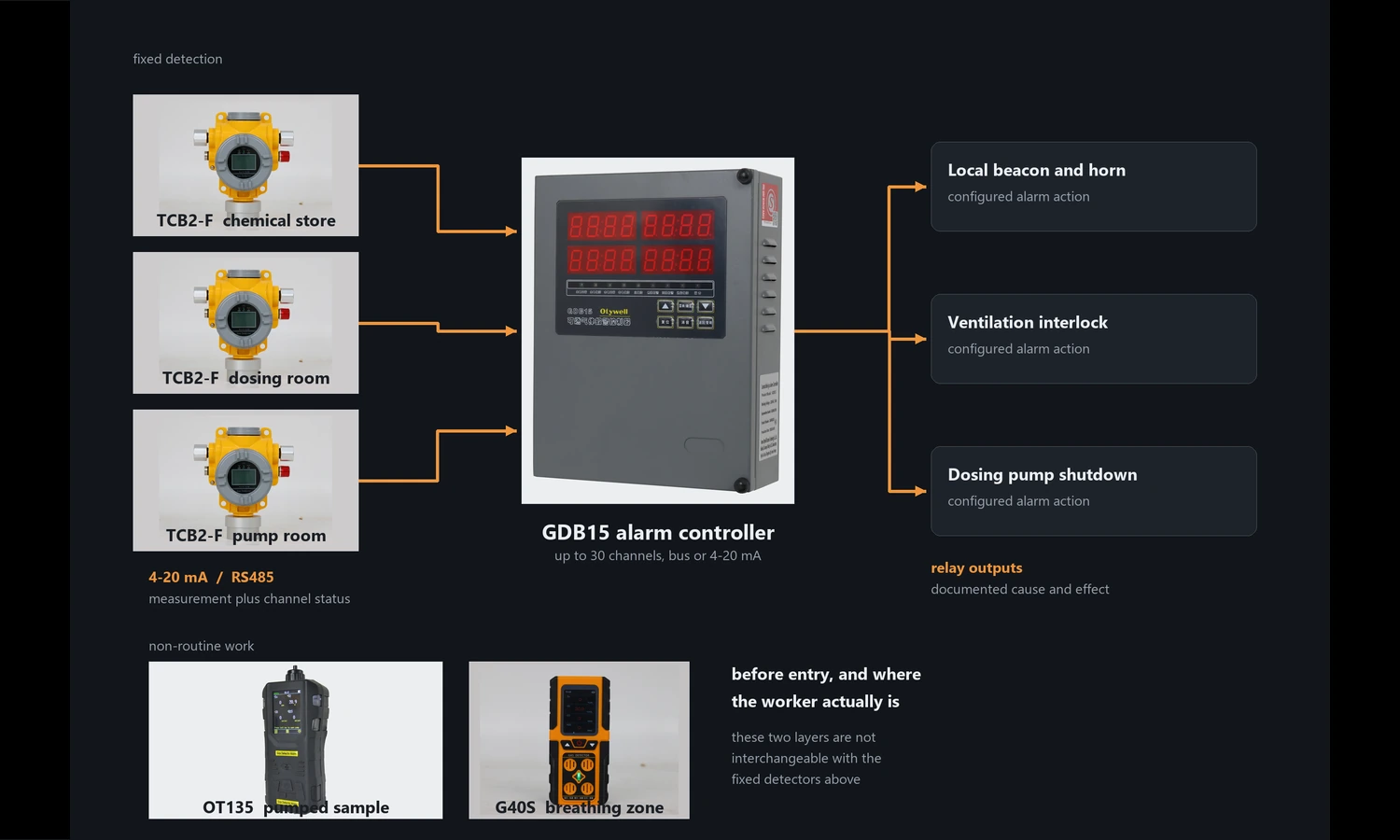
A portable detector used during a daily round does not provide continuous protection between visits. A fixed detector cannot follow a technician behind equipment or confirm conditions inside an enclosure. The design needs both functions where both tasks exist.
Continuous monitoring
Configure the TCB2-F for the chemical used in each room
The TCB2-F Point Type Four Gas Detector can be configured for one to four gases. Sensor options include electrochemical, catalytic and infrared principles, depending on the target gas and range. For water treatment chemical rooms, the selection may include chlorine, chlorine dioxide, ozone, ammonia or sulfur dioxide.
The detector supports 4-20 mA and RS485 outputs for connection to an alarm controller or plant system. LoRa, NB-IoT and 4G transmission are optional configurations. An integrated audible and visual alarm provides local indication, while the IP66 enclosure supports demanding industrial locations. Final sensor, housing, power, signal and certification details must be confirmed on the order.
A multi-gas housing is useful only when the selected sensors belong at the same monitoring point. If chlorine and ozone are handled in separate rooms, separate gas-specific detectors usually provide clearer zoning and maintenance records than combining unrelated sensors in one location.
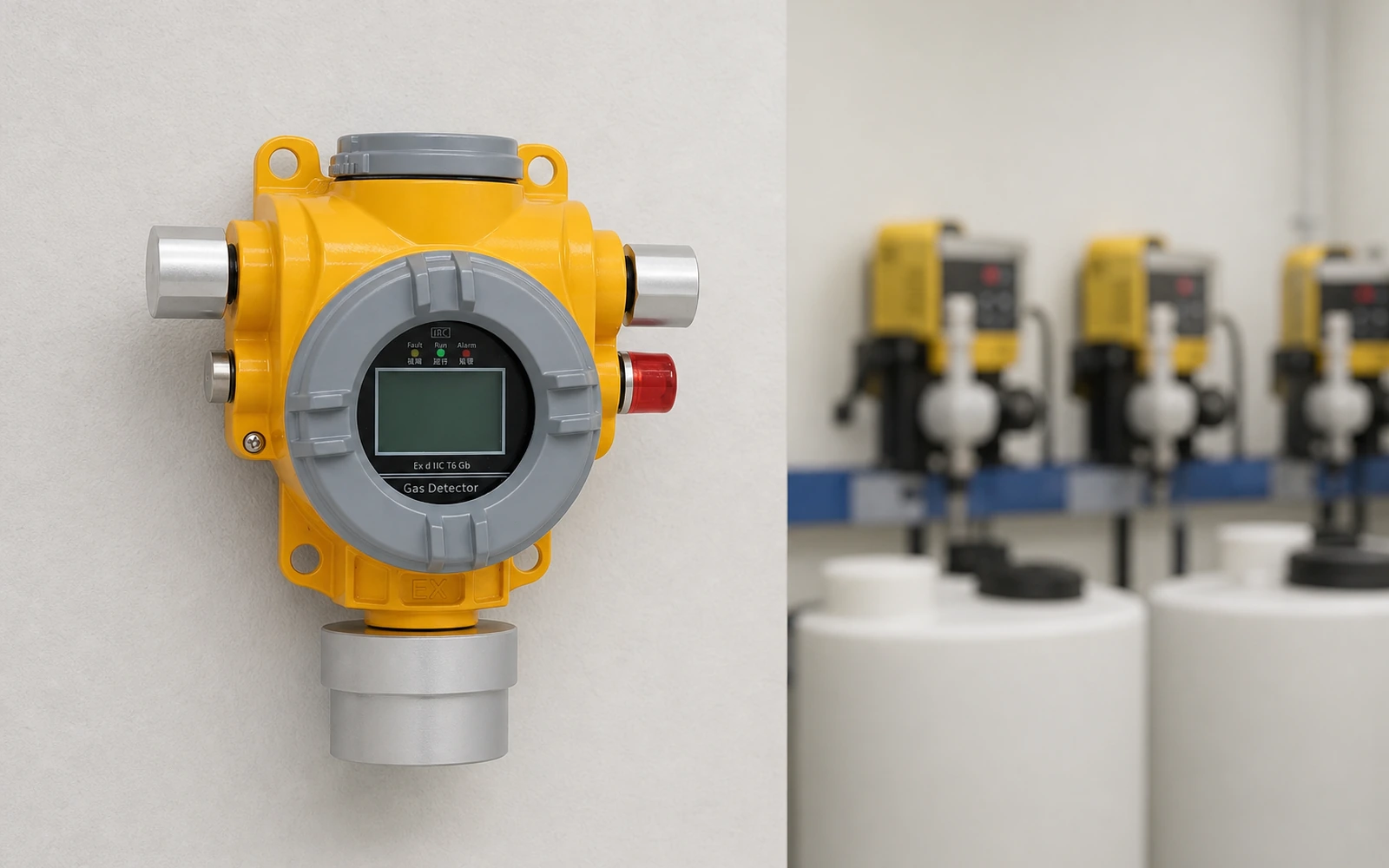
The fixed detector should be specified for the named chemical, range, environmental conditions and signal interface.
Gas selection
Do not treat oxidizing and toxic gases as interchangeable
| Target gas | Typical water treatment source | Detector requirement | Design question |
| Chlorine (Cl2) | Gas cylinders, ton containers, manifolds and chlorination equipment | Chlorine-specific sensor and a range suited to warning and response needs | Where can gas escape, and where should staff see the alarm before entering? |
| Chlorine dioxide (ClO2) | On-site generation skid, reaction vessel and dosing line | ClO2-specific sensor with cross-sensitivity review | Which precursor chemicals and oxidizing gases may be present in the same room? |
| Ozone (O3) | Ozone generator, contactor connection and off-gas destruction system | Ozone-specific sensor placed for the assessed release and airflow | Could ventilation or the ozone destruct system change the route of a release? |
| Ammonia (NH3) | Chloramination storage and feed equipment | NH3-specific sensor with suitable range and environmental limits | Is ammonia stored as gas, aqueous solution or another formulation? |
| Sulfur dioxide (SO2) | Dechlorination cylinders, manifold and dosing equipment | SO2-specific sensor with defined alarm logic | Can a release reach a corridor, control room or shared ventilation path? |
| Oxygen (O2) | Enclosed chemical area, inert-gas system or other assessed source | Oxygen sensor where depletion or enrichment is a credible hazard | Does the process create an oxygen hazard, or is a toxic-gas detector the correct control? |
Confirm cross sensitivity before approving the sensor
Chlorine, chlorine dioxide and ozone are strong oxidizing gases. A sensor intended for one may respond to another. That response does not make it a reliable substitute. The final proposal should identify the target gas, expected interfering gases, range, resolution, alarm modes and calibration gas.
Detector placement
Place detectors around credible release points and airflow
Gas density is one input to detector placement, not the complete method. A pressurized leak may form a jet. A warm process can create convection. Exhaust grilles can pull gas away from a detector or concentrate it in a duct. Walls, trenches and equipment bases can create pockets that do not match a simple high-level or low-level rule.
- Mark cylinder valves, regulators, manifolds, flexible connectors and feed equipment.
- Review normal supply air, exhaust air and emergency ventilation paths.
- Check floor trenches, pits, wall penetrations and enclosed equipment bases.
- Identify doors and routes used by operators, maintenance staff and emergency teams.
- Provide alarm indication where a person can see or hear it before entering the room.
- Leave safe access for functional tests, calibration and sensor replacement.
- Protect the sensing inlet from direct water spray, condensation and chemical splash without blocking gas movement.
A detector near the main cylinder manifold may not cover a separate injector room. The room entrance alarm may not detect a small leak inside an extracted cabinet. Larger or divided rooms may need more than one point even when they contain only one chemical.
Alarm and control
Use the GDB15 for a compact bus-based installation
The GDB15 Gas Alarm Controller is a wall-mounted controller for compatible RS485 gas detectors. Its digital display and keypad provide local status and alarm access without adding a large central panel to a small chemical building.
The controller provides configurable high and low alarm thresholds, a built-in audible and visual alarm, manual reset and mute functions, and storage for alarm and fault records. Its switch outputs and active pulse outputs can provide approved signals to warning devices or external control circuits. The exact interface must be checked against the connected equipment before wiring is specified.
Main and backup power switching supports local alarm continuity, but the project designer still needs to define what remains available during a power failure. Detector power, warning devices, ventilation and chemical isolation may have different continuity requirements.
GDB15 is a better fit when a chemical room has a modest number of compatible bus detectors and limited output requirements. A larger plant with many tagged points, mixed 4-20 mA and RS485 signals, or more extensive relay logic should be evaluated for a higher-capacity controller such as GDB9 rather than forcing every project onto the same host.
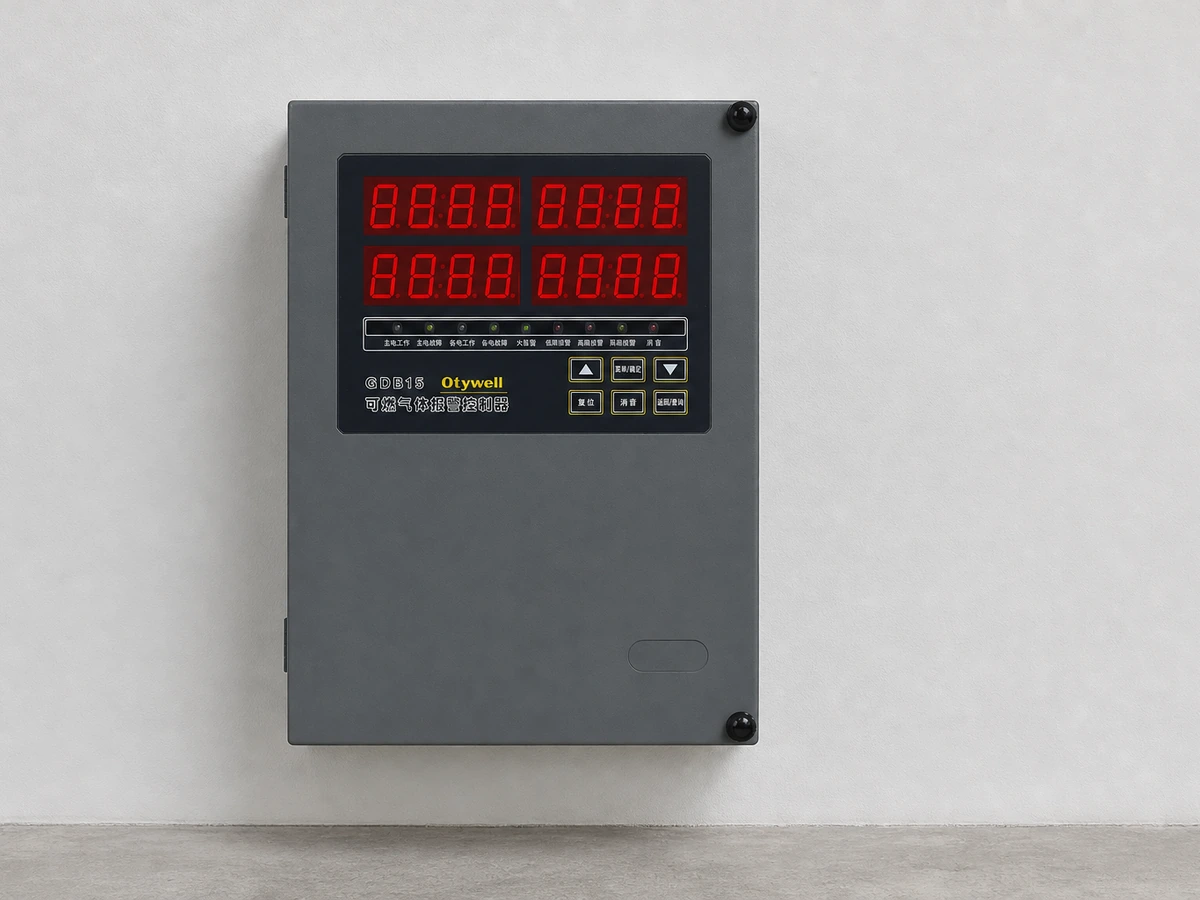
A compact controller can serve a small chemical building when detector protocol and output requirements are compatible.
The relay output is only one part of the safety function
Starting an exhaust fan or closing a chemical valve can affect room pressure, treatment continuity and emergency containment. The water utility and system designer must approve the cause-and-effect sequence. A gas detector manufacturer should not invent that sequence without the process, ventilation and emergency-response information.
Remote inspection
Use the OT135 to draw a sample before approaching the source
The OT135 Portable Pump-Suction Gas Detector draws gas through its built-in pump. With compatible tubing and a suitable probe, a technician can sample through an inspection port, near a doorway or around accessible equipment before moving closer to the suspected release.
The instrument can be configured for one to four gases and provides audible, visual and vibration alarms. It stores up to 1,000 data entries, and optional accessories include a sampling probe and tubing. The ordered sensors must match the chemical room. A standard combustible gas, oxygen, carbon monoxide and hydrogen sulfide combination will not detect chlorine dioxide or ozone unless the required gas-specific sensors are installed.
Typical tasks include:
- Checking a room from a designated sampling point after a fixed alarm
- Comparing readings near a cylinder bank, generator skid and room exhaust
- Testing an enclosure before it is opened for maintenance
- Confirming how readings change after approved isolation or ventilation
- Checking a different location without moving the fixed detector
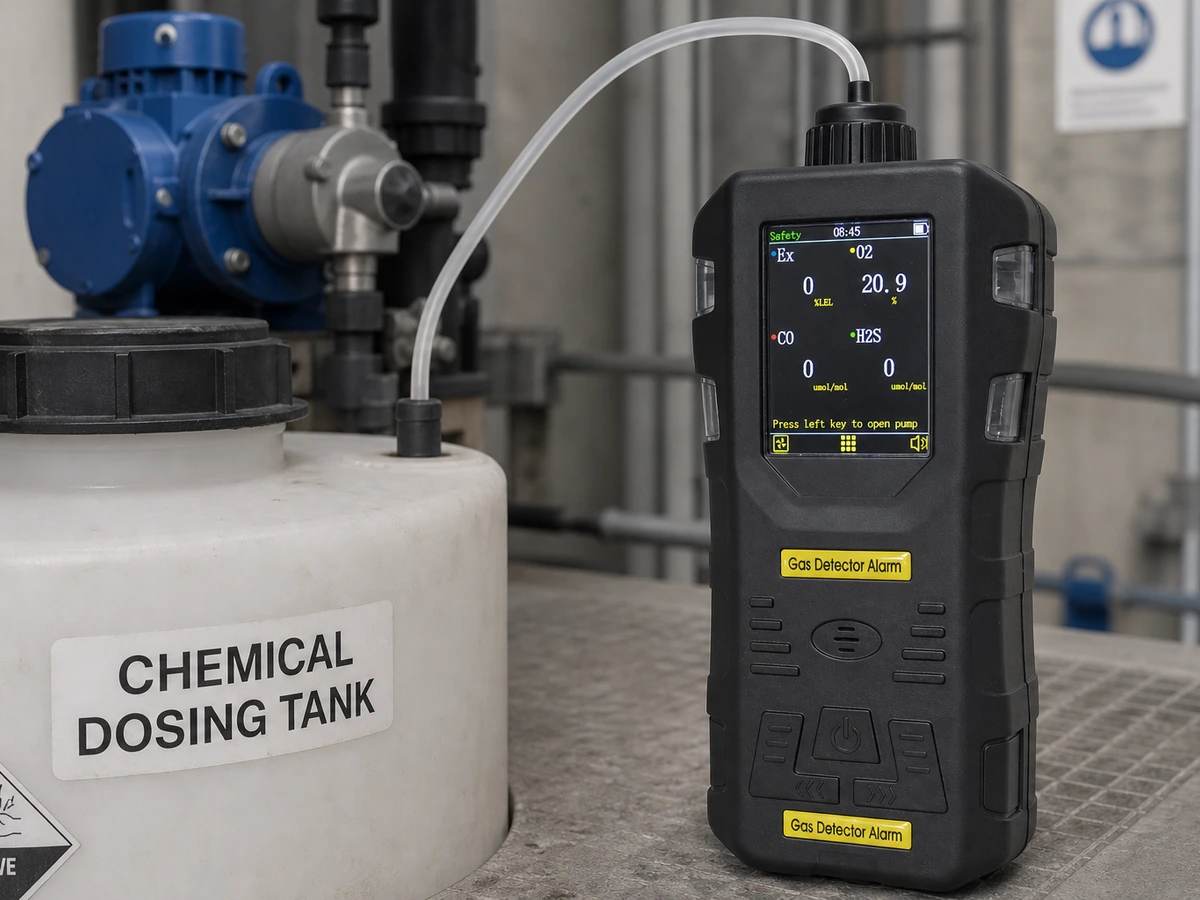
Pumped sampling can bring a remote atmosphere to the instrument while the operator remains at the selected sampling position.
Allow for tubing travel time and sensor response
A remote sample must travel through the full tube before the reading represents the selected point. Tubing length, pump flow, filters and sensor response affect the waiting time. The operator should use the instrument manual and site procedure to calculate the required sampling period at each location.
Reactive gases can be lost or delayed on unsuitable tubing, filters or wetted surfaces. Sampling accessories must be compatible with the target gas. The line may also require purging between points so that the previous sample does not influence the next reading.
Personal monitoring
Use the G40S for the worker’s breathing zone
Cylinder changes, regulator work and equipment maintenance place the technician closer to possible leak points than a wall-mounted detector. The G40S Portable Gas Detection Alarm uses natural diffusion and can be configured for one to four gases, with further configurations available after technical review.
The instrument provides audible, visual and vibration alarms. It supports low, high, TWA and STEL modes where they apply to the selected sensor and site procedure. Optional communication and positioning functions are available for projects that need connected worker features.
Personal monitoring must match the task. A technician entering a chlorine room needs a chlorine-capable configuration. A conventional four-gas confined-space monitor does not become a chlorine or ozone monitor because it also measures oxygen and combustible gas.
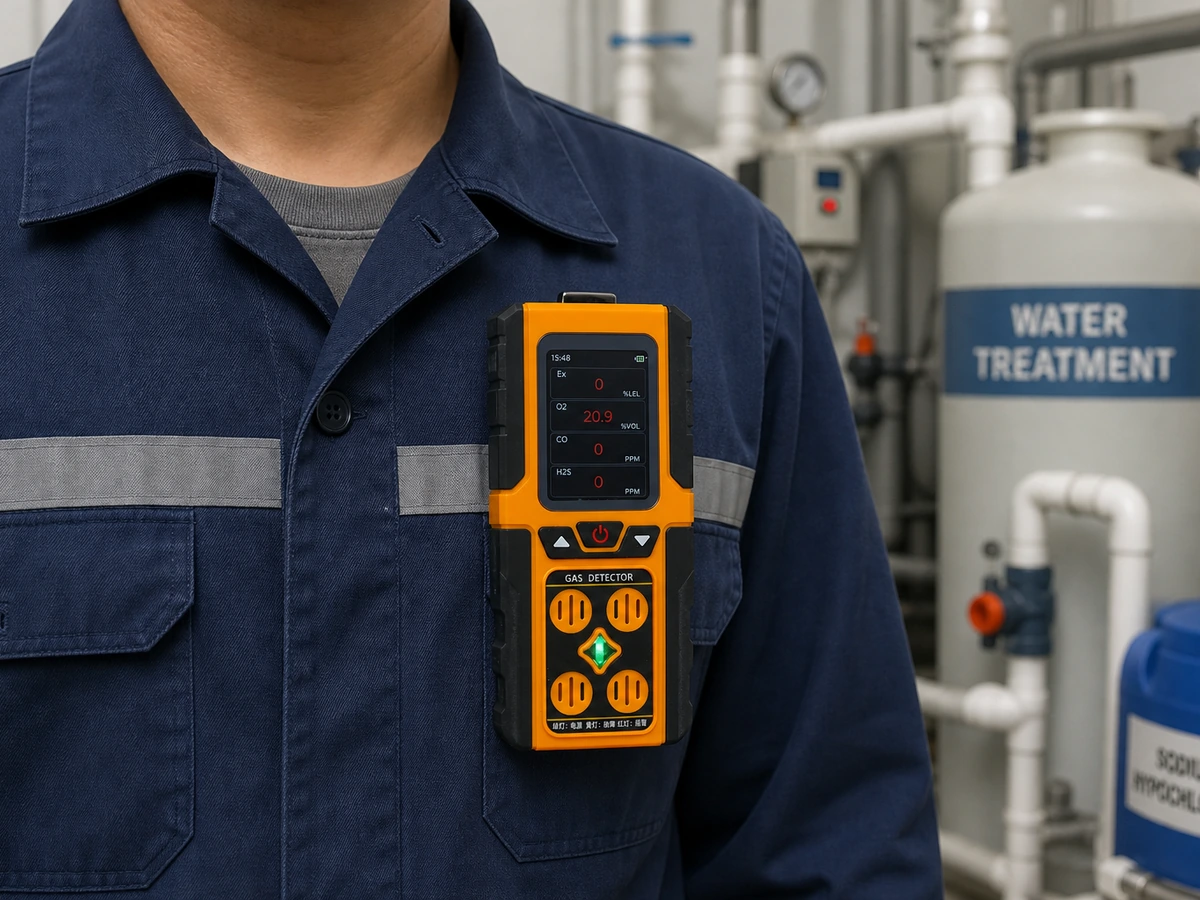
The G40S stays near the breathing zone while the worker moves through the task area.
Recommended equipment
Four products, four defined jobs
TCB2-F
Continuous gas-specific monitoring around chemical storage, generation and dosing equipment.
View product details Alarm controlGDB15
Bus-based alarm control, event records and output functions for a compact chemical-room installation.
View product details Pumped samplingOT135
Remote sample drawing and multi-point checks during inspection, maintenance and alarm investigation.
View product details Personal monitoringG40S
Breathing-zone monitoring during chemical handling, equipment inspection and maintenance work.
View product detailsCause and effect
Write the alarm response before programming the controller
| Condition | Information the operator needs | Response to define at project stage |
| Low gas alarm | Gas name, room, detector tag, concentration and trend | Local warning, control-room notification and restricted access |
| High gas alarm | Affected chemical system and possible release source | Evacuation, emergency notification and approved control actions |
| Detector fault | Which point has lost valid monitoring coverage | Maintenance response and an approved temporary control if required |
| Communication loss | Whether the field detector still has local alarm capability | Restore the signal path and manage the affected zone until it returns |
| Power failure | Which detectors, alarms and external systems remain powered | Backup supply, fault notification and controlled plant response |
Commissioning and maintenance
Test the detector, signal path and final response together
Commissioning should verify:
- Detector gas, range, sensor type, location and equipment tag
- Local display and audible or visual alarm operation
- Controller channel name, alarm levels and record storage
- 4-20 mA or RS485 communication under normal and fault conditions
- External beacon, sounder, ventilation and approved isolation signals
- Main and backup power behaviour
- OT135 pump, tubing, filter and response with the ordered sensors
- G40S alarm functions and the gas configuration assigned to each task
Maintenance intervals should follow the sensor, instrument and site requirements. The plan normally covers visual inspection, inlet condition, functional testing, calibration, pump checks, battery checks and sensor replacement. The calibration gas and accessories must be correct for the target sensor.
Water treatment environments may expose equipment to humidity, condensation, washdown, corrosive vapours and temperature changes. An IP rating does not remove the need to inspect the sensing inlet or confirm that environmental conditions remain within the ordered sensor limits.
Project information
Information needed for an Otywell system proposal
- List of treatment chemicals and their physical form
- Storage quantity, container type and normal operating pressure
- Room dimensions and equipment layout
- Normal and emergency ventilation information
- Credible release points and occupied work positions
- Target gases, measuring ranges and required alarm modes
- Expected humidity, condensation, washdown and temperature conditions
- Detector power and signal requirements
- Controller channel quantity and equipment tags
- Required interfaces to beacons, ventilation, PLC, SCADA or chemical controls
- Portable sampling distance, tubing and probe requirements
- Personal monitor gas combinations and quantity
- Calibration, maintenance and spare-sensor plan
- Required local certification and project documentation
This information allows each zone to receive the correct sensor rather than repeating one standard package across every chemical room.
Frequently asked questions
Water treatment gas monitoring FAQ
Which gases should a water treatment plant monitor?
Monitor gases that can be released by the site’s actual treatment chemicals and processes. Common examples include chlorine, chlorine dioxide, ozone, ammonia and sulfur dioxide. Wastewater areas may add hydrogen sulfide, methane and oxygen concerns, but those hazards should not be assumed for every drinking-water chemical room.
Can one sensor detect chlorine, chlorine dioxide and ozone?
Do not assume that one sensor can measure all three reliably. These gases can create cross responses, but cross sensitivity is not the same as accurate target-gas measurement. Specify the sensor for the named gas and review possible interferents with the supplier.
Where should a chlorine gas detector be installed?
Placement should follow the assessed release points, room airflow, equipment arrangement and occupied routes. Chlorine density is relevant, but ventilation, pressurized leakage, trenches and barriers can change where gas travels. Alarm indication should also be visible or audible before personnel enter the room.
Can the TCB2-F monitor more than one treatment gas?
The TCB2-F can be configured for one to four gases. The proposed sensor combination still requires a compatibility review. Sensors for chemicals used in separate rooms should not be combined in one detector merely to fill the available channels.
Why use the OT135 when fixed detectors are installed?
A fixed detector watches its installed location. The OT135 can draw a sample from another selected point during an inspection or alarm investigation. It can help compare conditions near a doorway, cabinet, cylinder bank or generator skid without relocating the fixed detector.
Does the G40S replace pump-sampled remote testing?
No. The G40S is a diffusion-based personal monitor intended to stay near the worker’s breathing zone. The OT135 uses a pump to draw a sample through tubing or a probe. A task may require remote sampling first and personal monitoring during the work.
Can the GDB15 automatically start ventilation?
The GDB15 provides output functions that can send a signal to compatible external circuits. The plant designer must define and approve the ventilation or isolation sequence. The response depends on the chemical, room pressure, exhaust route, containment system and local requirements.
How often should water treatment gas detectors be calibrated?
Use the sensor manufacturer’s instructions, site risk assessment and applicable local requirements to set the interval. Humidity, corrosive exposure, contamination, sensor age and failed functional checks may justify more frequent service. Portable instruments also need pump, tubing, filter and battery checks.
Configure the monitoring system
Send us the chemical list and room layout
Otywell can configure fixed detectors, controller channels, OT135 sampling equipment and G40S personal monitors around the gases and work tasks at your water treatment facility.
Final detector locations, alarm settings, interlock actions and certification requirements must be reviewed against the actual installation before the system is approved.