
Confined Space Gas Detection: Choose the Right Monitor for Pre-Entry Testing and Work
Confined space gas detection starts with two different measurement jobs. Before entry, the tester needs a reading from inside the space while remaining outside it. During work, the entrant needs to know what is happening in the air around them. The gas channels, sampling arrangement and alarm plan have to fit both jobs.
List the spaces and tasks first, then specify the gases and ranges for each. Use a suitable remote sampling arrangement to check the intended points before entry. Choose a wearable monitor for the air around the worker during the job. A four-gas configuration is common, but it does not identify every substance that may be present.
- Map the space
- Test before entry
- Monitor during work
- Record and respond
Define the space, work and gas list before buying a monitor
“Confined space” describes a wide range of jobs. A wastewater manhole may contain a different mixture from a cleaned vessel, an inerted tank or a utility vault. Even two spaces at the same plant can differ in depth, access, connected pipework and ventilation. The equipment list should therefore begin with the actual space and the work planned inside it, rather than a standard detector package.
Map the space and work stages
Give each space an identifier. Mark the entrance, changes in level, sumps, partitions and any places that a probe cannot easily reach. Add connected lines and the materials last held or used there. Cleaning, welding or other maintenance can change the atmosphere after an initial reading. The work schedule should say when a new sample is needed, including after a change in process conditions or an interruption.
Specify gases and units
Oxygen is displayed in percent by volume. Combustible gas is often displayed as percent of the lower explosive limit (%LEL), while toxic gases such as carbon monoxide and hydrogen sulfide are commonly displayed in parts per million (ppm). These numbers answer different questions. Record the named gas and the required range beside every channel. A product page’s list of available gases describes configuration options; it does not mean that one delivered instrument contains every sensor on the list.
Four-gas units commonly combine oxygen, a combustible-gas channel, CO and H₂S. A space containing carbon dioxide, ammonia or another process substance may require a different combination or another measurement method. If the substance cannot yet be identified, leave that part of the specification open rather than assuming the four familiar channels cover it.
| Item to record | Question for the site | Effect on the instrument order |
|---|---|---|
| Space and task | Where will people enter, and what work will change the atmosphere? | Defines sampling locations and monitoring period |
| Possible substances | What is in connected equipment, residues or work materials? | Determines fitted sensor channels |
| Units and ranges | Which gas, concentration range and display unit are required? | Determines sensor and calibration configuration |
| Access | How far is the point to be checked from the opening? | Determines probe, tube and pump arrangement |
| Environment | What temperature, moisture and hazardous-area conditions apply? | Determines suitable version and documentation |
Separate pre-entry testing from monitoring during work
Read the air inside while the tester remains outside
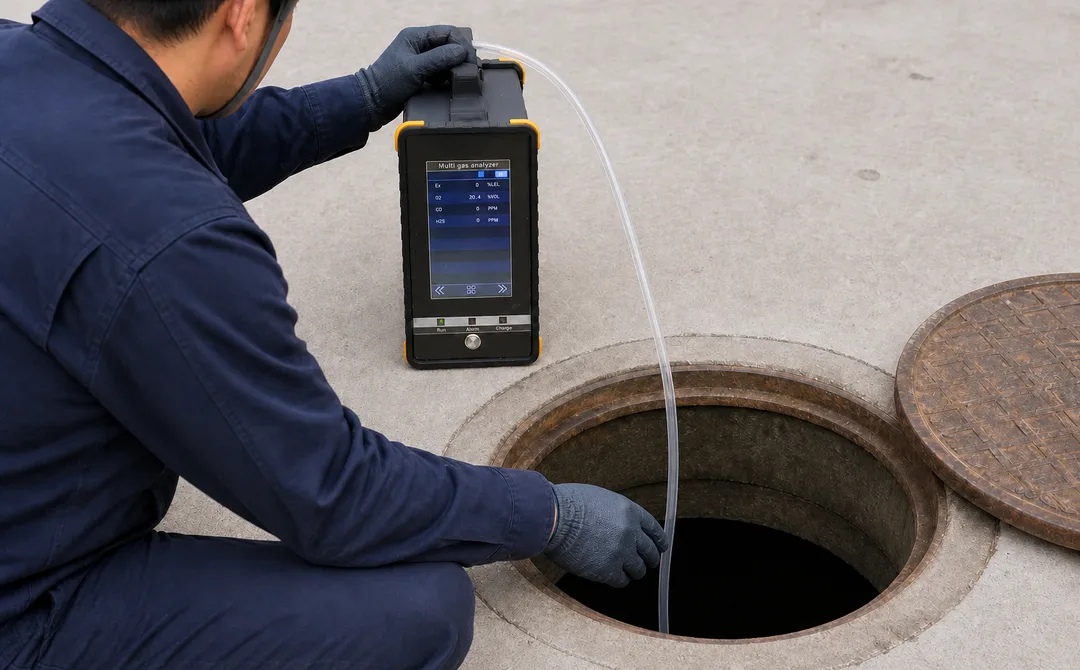
A diffusion monitor reads the air reaching its own inlet. Held at a hatch, it does not describe a distant point at the bottom of a tank. For a remote check, a pump, probe and suitable tube bring a sample from the intended position to the detector. The inlet is the measurement point, not the operator’s hand. Draw those positions on the entry plan so a later record can be tied to a real location.
Where a space has different levels, recesses or moving air, a single reading at the opening is a poor description of the interior. The sampling pattern should follow the geometry and credible sources of gas. For US general-industry permit spaces, OSHA’s atmospheric-testing appendix addresses stratified atmospheres, the rate of progress with a probe and the order of oxygen, combustible and toxic-gas tests. Its procedure is a jurisdiction-specific example, not a universal set of alarm values.
Watch the air around the worker during the job
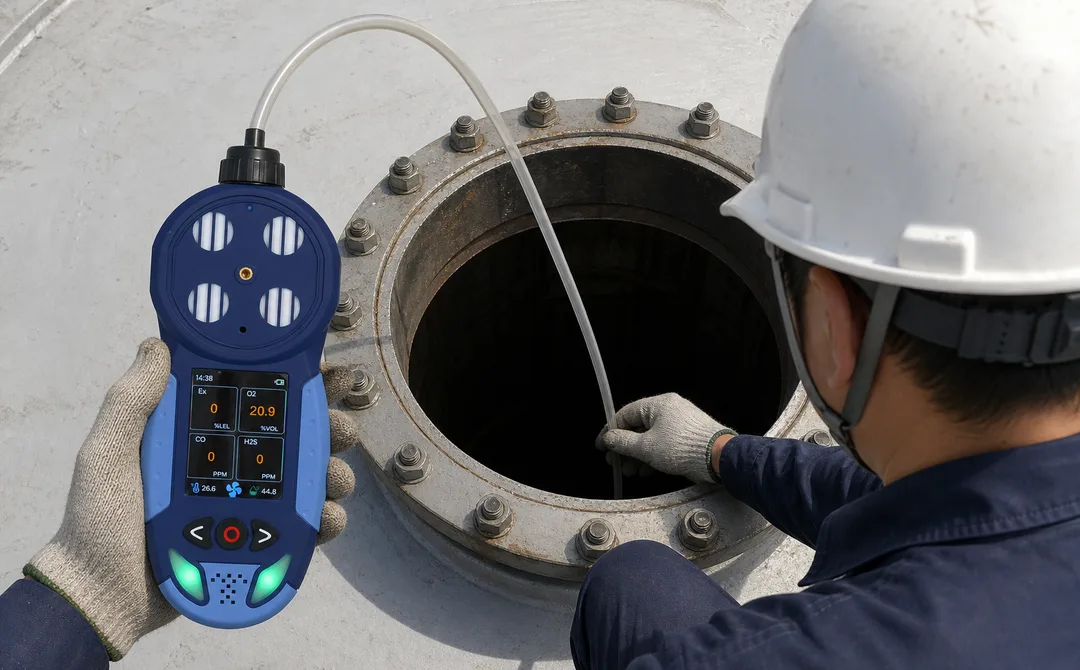
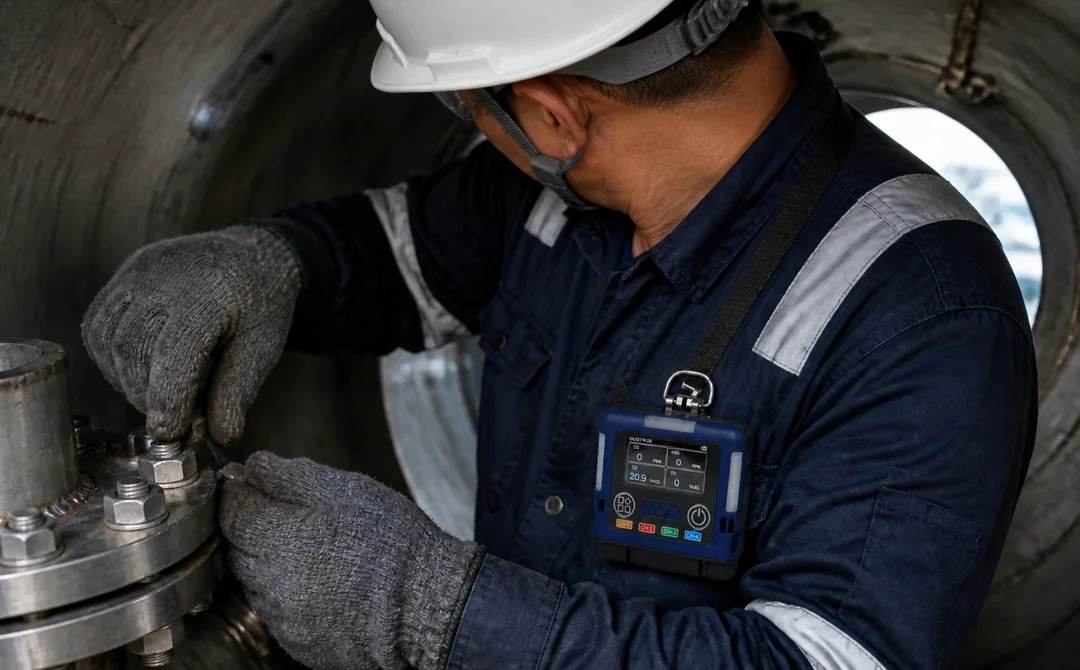
The pre-entry result describes one time and set of sample points. Conditions may change when a valve is opened, material is disturbed or ventilation changes. A monitor worn with an unobstructed inlet follows the entrant’s position. Check that its alarms can be noticed in the actual work setting and that the fitted channels cover the gases named for the task. The attendant or other designated person also needs an agreed route for receiving and acting on an alarm.
Where a fixed point fits
A permanently installed detector can watch a selected point, for example a recurring hazard near equipment or a defined area by an access route. Its reading still belongs to that point. It does not tell the entrant what the air is like behind an obstruction or farther inside the space. Treat fixed detection, remote pre-entry sampling and personal monitoring as separate rows in the equipment schedule.
| Job | Where the sample comes from | Configuration to confirm | Who needs the result |
|---|---|---|---|
| Pre-entry test | Selected points inside the space | Pump, probe, tubing, target gases and response | Tester, entrant and entry supervisor |
| Monitoring during work | Air around the wearer | Fitted gases, inlet position, alarms and runtime | Entrant and agreed attendant route |
| Fixed-point monitoring | One installed location | Sensor, position, output and alarm recipient | People assigned to that fixed point |
Build a representative remote sampling setup
Specify the whole path, not just the pump
A pump-suction model is only part of the remote sampling arrangement. State the longest reach, proposed sample positions, probe shape, tube material and filter. The tube must suit the target gas and the physical route. Moisture, a blocked inlet or a leaking connection can change what reaches the sensor. Ask how the selected instrument reports low flow or pump blockage, and include a way to check the complete path before use.
Allow for sample travel and instrument response
The sample spends time travelling from the inlet through the line. The sensor then needs time to respond. A quick glance at the display immediately after moving the probe can describe the previous point rather than the new one. Determine the wait for the ordered pump, line and gas configuration; do not borrow a fixed number of seconds per metre from another manufacturer’s device. OSHA’s appendix calls for readings to be held at least for the instrument’s specified minimum response time, and a probe may require slower progress through a stratified space.
Choose locations that represent the work
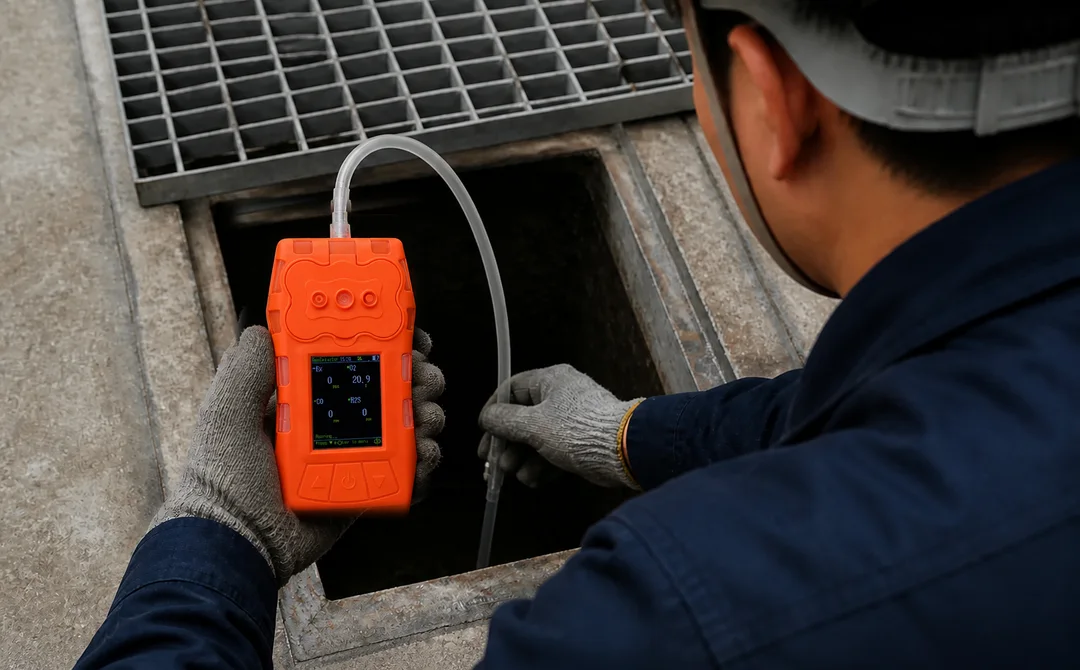
Map where a release could occur, where gas may collect and where a person will work. Different heights may matter, but “top, middle and bottom” is not a complete plan for every vessel. Partitions, pits, an active fan or an inaccessible branch can leave important air untested. If the probe cannot reach a planned point, record the gap and revise the sampling method. A pump fault, unstable reading or blocked line is not a zero-gas measurement.
Check sensor limits and instrument readiness
Make the four-gas set a deliberate choice
Compare every ordered channel with the space’s gas list. Confirm the sensor that will actually be fitted, its range, the calibration gas and the units shown on the screen. A four-channel unit with the wrong combination does not become suitable because its enclosure and display look familiar. Where another substance is credible, specify a compatible extra channel or a different test method.
Flag low-oxygen and inerted atmospheres
Low oxygen can affect some combustible-gas measurement principles. Inerted tanks may also contain concentrations outside a routine %LEL survey range. Before specifying a monitor for that task, establish the expected atmosphere and ask for the sensing principle and range of the exact version. An oxygen reading and a %LEL display alone do not establish that the combustible reading is valid under those conditions.
Check the instrument that will go to the job
Read the model instructions for the required function check, calibration, pump check and battery status. Inspect the inlet, probe, tubing and filters as part of the same setup that will be used for the measurement. The certificate and hazardous-area marking must match the actual supplied version and destination requirement; an IP rating describes enclosure protection and is not a substitute for an explosion-protection approval.
Before the product comparison, write one line for each needed instrument: target gases, fitted channels, ranges, sampling mode, maximum line length, alarm modes, fault indication, operating conditions and required records. That short schedule prevents a broad feature list from hiding a missing sensor or accessory.
Otywell equipment for four measurement jobs
The models below have different sampling and monitoring roles. Specify the actual gas sensors, ranges and accessories for the version being ordered.
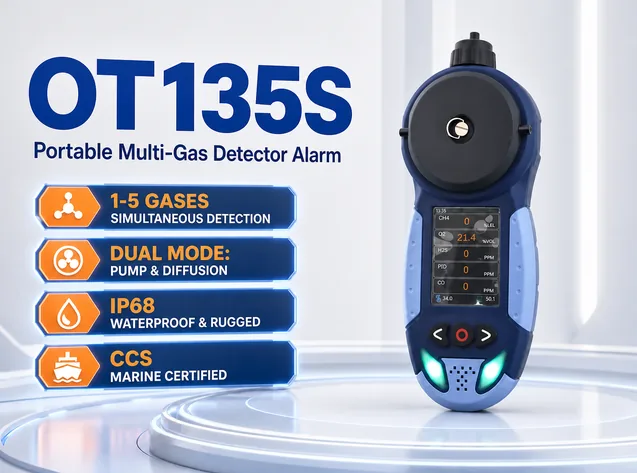 Remote sampling option
OT135S Portable Gas Detection Alarm
Select one to four target gases. Choose the pump-suction configuration for remote checks or the natural-diffusion configuration for air around the wearer.
View OT135S details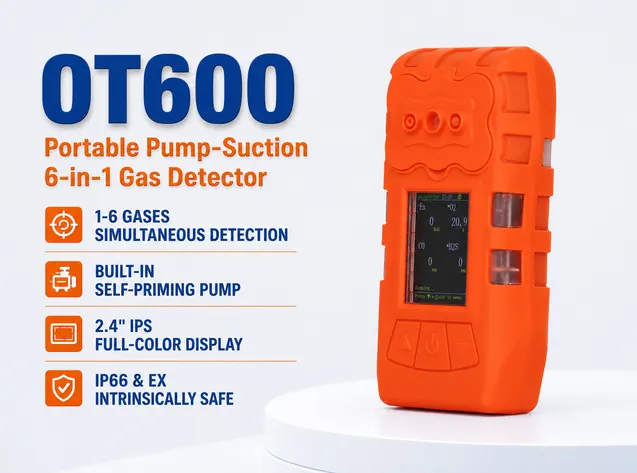 More gas channels
OT600 Pump-Suction Detector
Built-in pump and selectable one-to-six-gas configuration. Sampling probe and guide tube are optional; confirm them for the planned reach.
View OT600 details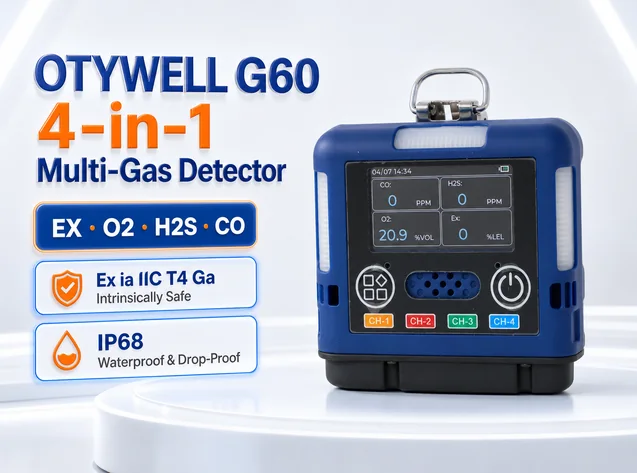 Personal monitoring
G60 4 in 1 Multi-Gas Detector
Natural-diffusion monitoring with configurable gas sensors and local sound, light and vibration alarms for the wearer.
View G60 details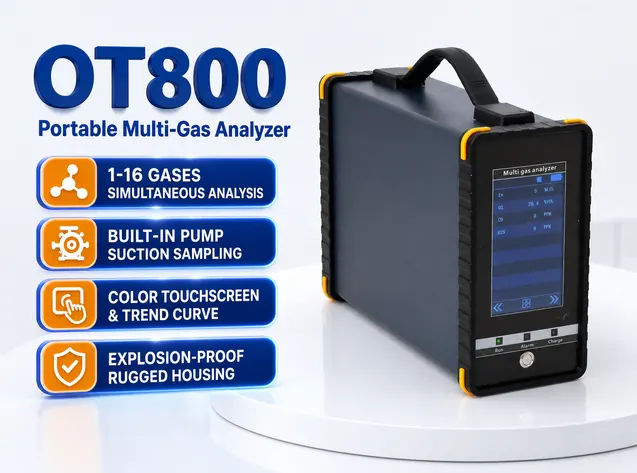 Multi-gas investigation
OT800 Portable Multi-Gas Analyzer
Built-in pumped sampling with configurable one-to-sixteen-gas measurement and a displayed concentration curve for survey work.
View OT800 detailsTurn the readings into a usable record
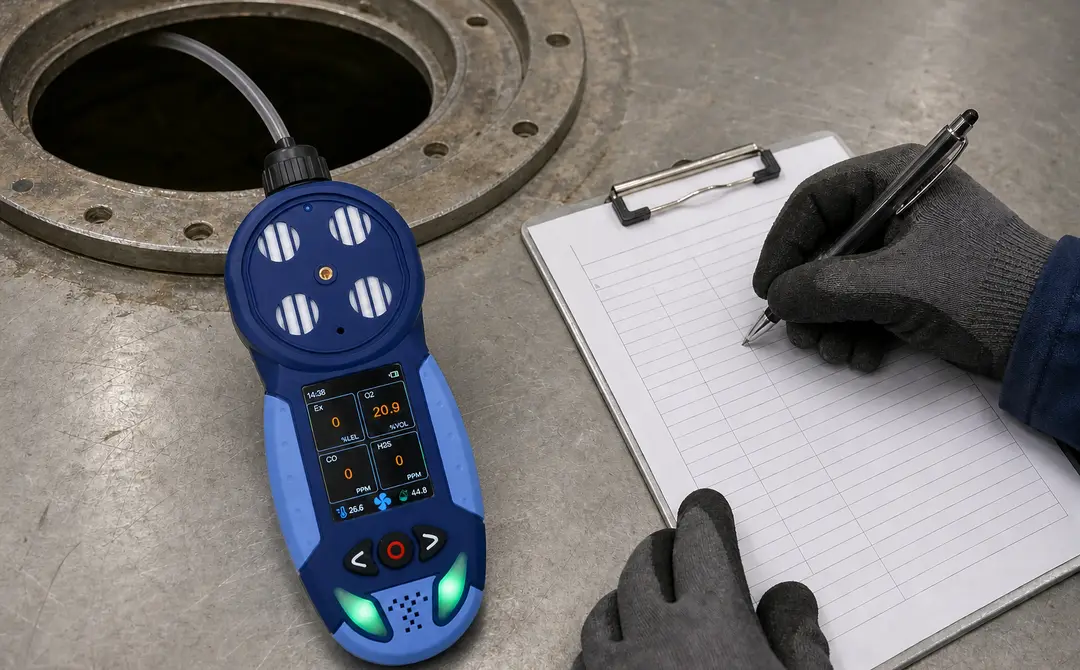
A row of numbers without a location is hard to interpret. Record the space identifier, sample inlet position, time, target gas, unit, reading, instrument identifier and tester. If the probe was moved between levels, give each position its own row. Note whether ventilation or another site condition changed between tests. The reader of the permit should be able to tell which part of the space a reading describes.
For US general-industry permit spaces, 29 CFR 1910.146 sets out pre-entry atmospheric testing and relevant ongoing checks. Its sample entry permit includes the time, atmospheric readings and tester’s signature. Prepare the site record using the requirements for its jurisdiction and type of work.
Keep abnormal states distinct
A gas alarm, pump-flow fault, depleted battery and failed function check require different follow-up. Label them separately in the work instructions and records. If a hazardous atmosphere is detected during a US general-industry entry covered by OSHA’s cited provision, employees leave the space, the cause is evaluated and protective measures are put in place before another entry. A pump fault or missing gas channel likewise means the intended measurement has not been completed.
| Purchase and handover field | What to specify | What to verify on delivery |
|---|---|---|
| Measurement | Named gases, fitted channels, ranges and units | Sensor labels and displayed channels match the order |
| Sampling | Pump or diffusion, probe, tube material and reach | Supplied accessories and full-path response |
| Alarms and faults | Local warnings, pump fault, low battery and recipient | Each indication can be identified in the work setting |
| Operating conditions | Temperature, moisture and required approval | Exact version and documents match the destination |
| Records and service | Test log, calibration items and replacement parts | Instructions and agreed accessories are supplied |
Prepare a confined-space detector enquiry
Send the space list, expected gases and ranges, drawings or depths for remote sample points, number of entrants, shift length, operating conditions and required approval documents. State which instruments must perform the pre-entry check and which must travel with workers. The Otywell confined-space product range provides a starting list; the final sensor and sampling configuration comes from the job schedule.
Frequently asked questions
What gases should a confined-space monitor measure?
Start with the substances that could be present in that particular space and the work being done. Oxygen, combustible gas, CO and H₂S are a common four-channel combination. Another process gas may need a different fitted sensor or a separate measurement method.
Can a diffusion monitor test a tank from the hatch?
It reads air at its own inlet. If that inlet remains at the hatch, the display does not measure a distant point inside the tank. Remote testing needs a suitable sampling arrangement that brings air from the chosen point to the sensor.
How long should a pumped sample run before using the reading?
Allow for travel through the complete probe and tube, then for the instrument’s response to the target gas. The time depends on the ordered pump, line and sensor configuration, so a single wait time cannot describe every setup.
Is a four-gas detector enough for every confined space?
No. Its four fitted channels may miss a substance associated with the process, cleaning materials or work activity. Compare the actual gas list with the sensors installed in the delivered instrument.
Can one device handle testing before and during entry?
That depends on its exact sampling version, accessories, sensor set, alarms and how it can be carried. A pumped unit may be configured for remote checks; a diffusion unit reads air around its wearer. Confirm both tasks against the model instructions and ordered configuration.
What changes when a vessel has been inerted?
Oxygen can be low and combustible-gas measurement may require a different sensing principle or range from a routine four-gas setup. Specify the expected atmosphere and check the exact sensor method before relying on its reading.
What belongs in a pre-entry gas test record?
Include the space, sampling positions, date and time, named gases, units and readings, instrument identifier and tester. Record changes such as ventilation or a repeated measurement so each number retains its context.