Steel Plant Toxic and Combustible Gas Monitoring Solution
Steel production creates several gas hazards within the same facility. Carbon monoxide may escape from blast furnace gas or coke oven gas systems. Fuel gas leaks can form a combustible atmosphere. Enclosed pits, galleries and maintenance spaces may contain toxic gases or insufficient oxygen.
Otywell combines fixed multi-gas detectors, a central alarm controller, pump-sampled portable testing and personal gas monitors in one site-specific detection arrangement. The system covers continuously occupied areas, process gas equipment, planned maintenance and the changing atmosphere around workers.
Continuous monitoring around selected process gas equipment
Local and central audible and visual alarms
Optional ventilation, valve or shutdown signal outputs
Pump sampling before maintenance or entry
Personal monitoring during routine and non-routine work
THE MONITORING PROBLEM
Gas risk changes from one production area to another
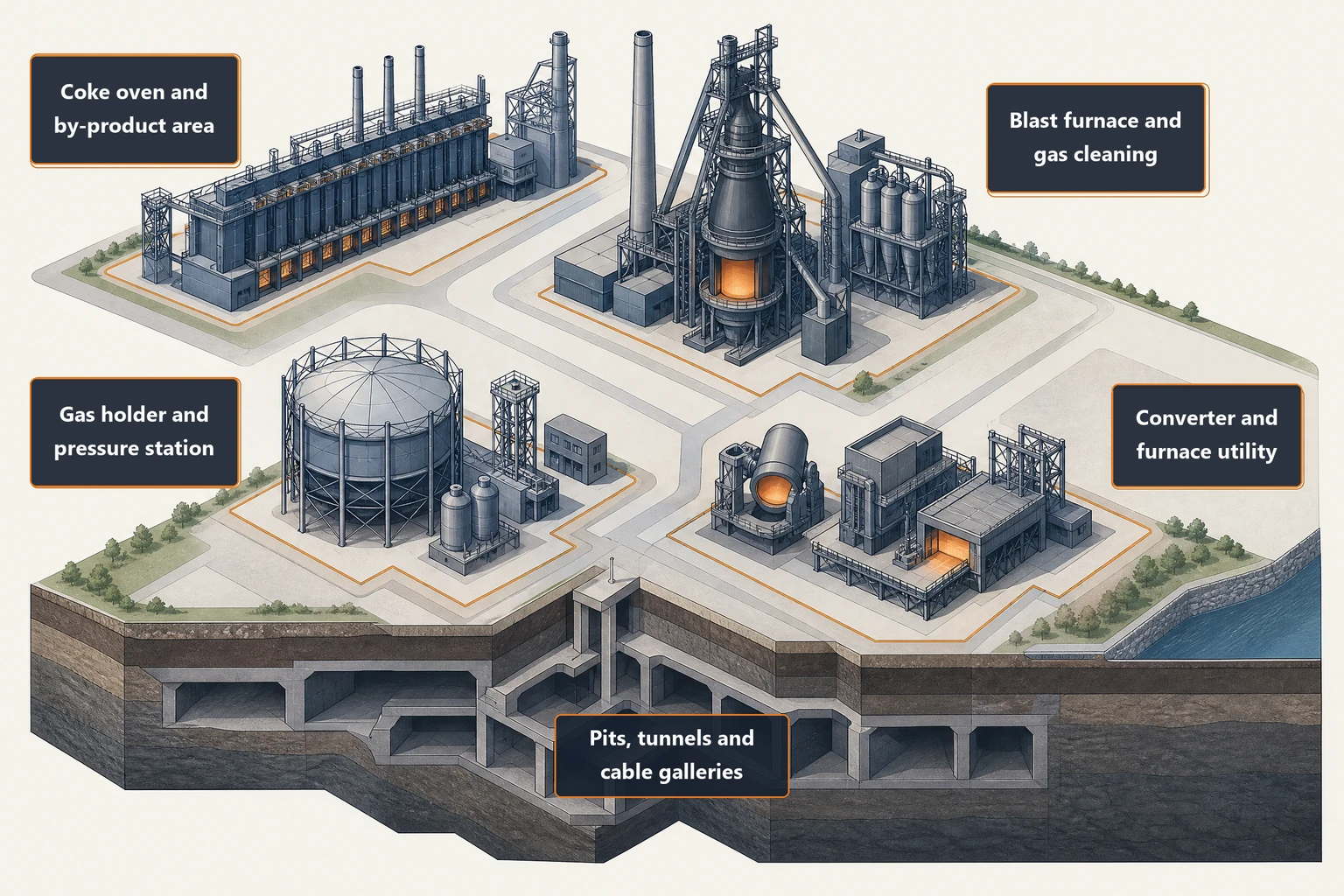
A steel plant is not a single monitoring environment. Coke ovens, blast furnaces, gas-cleaning equipment, gas holders, pressure stations, reheating furnaces and underground utility spaces have different release sources, ventilation patterns and access conditions.
Carbon monoxide deserves particular attention around fuel-gas production and handling. It is colourless and odourless, so workers cannot use smell or visual observation to judge whether an area is safe. Combustible gas presents a separate fire and explosion risk. Oxygen deficiency can develop in enclosed or poorly ventilated spaces, while hydrogen sulfide and other toxic gases may be present in selected process or wastewater areas.
One detector installed at a convenient wall location cannot represent every release point or worker position. A reliable design divides the plant into monitoring zones and assigns a suitable form of detection to each job:
Fixed detectors watch identified gas release and accumulation areas.
The alarm controller collects signals and manages site responses.
A pump detector tests locations before a worker approaches or enters.
A personal detector follows the worker through the task.
These layers have different purposes. A fixed detector provides continuous coverage at its installed location, but it does not confirm the atmosphere inside every vessel, pit or enclosed space. A portable detector can test those locations, but only while it is present and operating. Personal monitoring covers the worker’s breathing zone rather than the whole plant.
HAZARD MAPPING
Start with the process, not the detector model
Detector selection begins with a site survey. The engineering team identifies the gases used or produced in each area, the equipment most likely to release them and the path a gas cloud may follow after a leak.
Plant area
Typical gas concerns
Monitoring task
Suggested equipment layer
Coke oven and by-product area
CO, H2S and combustible gas
Monitor gas-handling equipment, selected work areas and likely leakage points
Fixed detectors plus personal monitors
Blast furnace and gas-cleaning area
CO, combustible gas and oxygen deficiency
Watch gas pipes, valves, cleaning equipment and occupied access routes
Fixed detectors, controller and portable confirmation
Gas holder, mixing or pressure station
CO and combustible gas
Detect leaks around valves, flanges, seals, compressors and enclosed equipment areas
Fixed detection with local and central alarms
Converter or furnace utility area
CO, combustible gas and oxygen condition
Monitor occupied areas around fuel-gas equipment and off-gas systems
Fixed detectors plus personal monitoring
Pits, tunnels and cable galleries
Oxygen deficiency, CO, H2S or combustible gas
Test the atmosphere before access and continue monitoring during work
Pump-sampled portable detector plus personal monitor
Shutdown and maintenance work
Gas combination depends on the isolated equipment
Check equipment openings, line breaks, vessels and temporary work zones
Portable sampling and personal monitoring
This table is a design starting point. The final gas list must come from the plant’s process information, chemical inventory, operating history and task risk assessment.
Plant area
Typical gas concerns
Monitoring task
Suggested equipment layer
Coke oven and by-product area
CO, H2S and combustible gas
Monitor gas-handling equipment, selected work areas and likely leakage points
Fixed detectors plus personal monitors
Blast furnace and gas-cleaning area
CO, combustible gas and oxygen deficiency
Watch gas pipes, valves, cleaning equipment and occupied access routes
Fixed detectors, controller and portable confirmation
Gas holder, mixing or pressure station
CO and combustible gas
Detect leaks around valves, flanges, seals, compressors and enclosed equipment areas
Fixed detection with local and central alarms
Converter or furnace utility area
CO, combustible gas and oxygen condition
Monitor occupied areas around fuel-gas equipment and off-gas systems
Fixed detectors plus personal monitoring
Pits, tunnels and cable galleries
Oxygen deficiency, CO, H2S or combustible gas
Test the atmosphere before access and continue monitoring during work
Pump-sampled portable detector plus personal monitor
Shutdown and maintenance work
Gas combination depends on the isolated equipment
Check equipment openings, line breaks, vessels and temporary work zones
Portable sampling and personal monitoring
This table is a design starting point. The final gas list must come from the plant’s process information, chemical inventory, operating history and task risk assessment.
CONTINUOUS AREA MONITORING
Install TCB2-F detectors where a release can reach the sensor
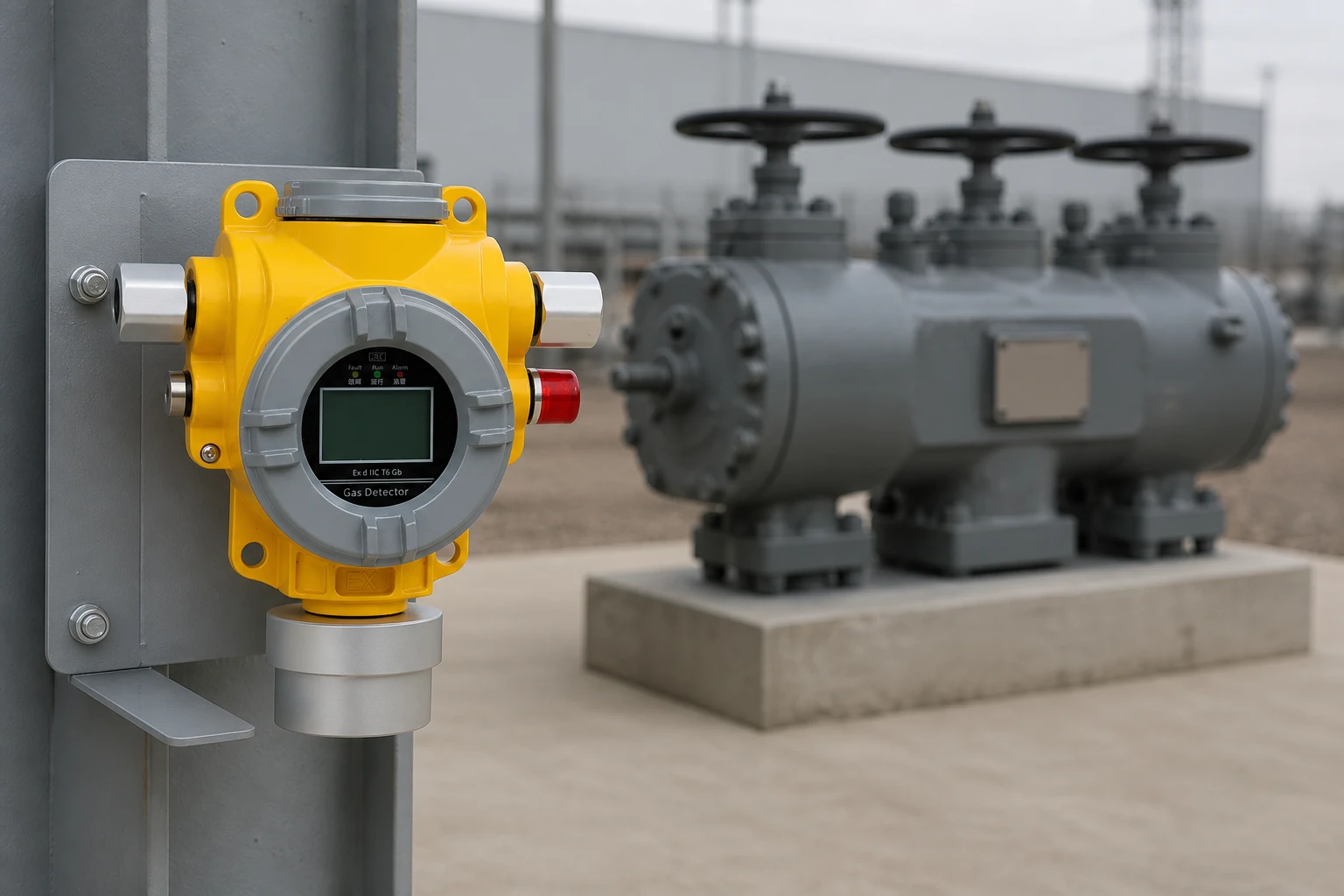
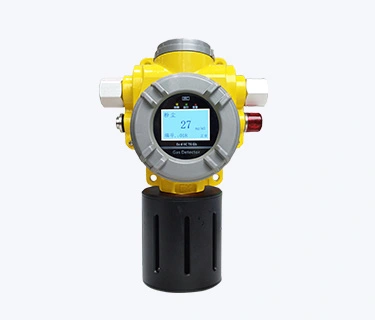
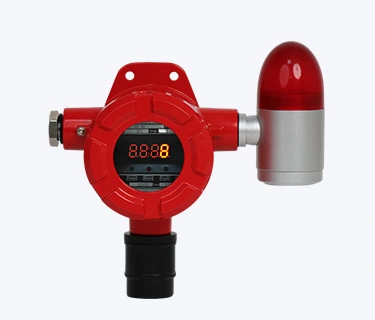
The TCB2-F Point Type Four Gas Detector provides continuous monitoring at selected locations. One unit can be configured for one to four gases, which allows a single monitoring point to cover several hazards when the sensor combination is technically suitable.
A typical steel plant configuration may include CO, combustible gas, O2 and H2S. Other toxic gases can be considered for process areas that require them. The required sensors, measuring ranges and detection principles must be confirmed before ordering.
The detector has a stainless steel enclosure and an integrated audible and visual alarm. Signal options include 4-20 mA and RS485, with wireless communication available as a configured option. This makes the TCB2-F suitable for local alarm points as well as multi-point systems connected to a gas alarm controller.
Detector placement requires a release-path assessment
Gas density alone is not enough to determine mounting height. Hot process gases can rise, ventilation can redirect a plume and structural obstructions can create local pockets. The detector position should account for:
Valves, flanges, seals, compressors and other possible release points
Normal and abnormal airflow through the area
Gas temperature and expected behaviour after release
Platforms, doors, walls and equipment that may restrict dispersion
Worker access routes and occupied operating positions
Radiant heat, dust, water spray and mechanical damage
Access for inspection, gas testing, calibration and sensor replacement
The sensing inlet should remain exposed to the atmosphere being monitored. It should not be hidden behind structural steel or installed where deposits can block gas movement. Where radiant heat, heavy dust or water exposure exceeds the selected detector’s operating conditions, the installation requires shielding, remote sampling or another engineered arrangement.
Related Products
Otywell focuses on the research, development, manufacturing, and application of advanced safety products, including IoT laser dust monitors, solar-powered flame detectors, wireless combustible and toxic gas leak detectors, valve chamber methane detectors, magnetic gas leak alarms, laser methane remote sensing instruments.
TCB1000-PM2.5 pm10 dust concentration detector
The TCB1000 dust concentration detector converts airborne dust concentration signals into digital signals, employing a
Otywell focuses on the research, development, manufacturing, and application of advanced safety products, including IoT laser dust monitors, solar-powered flame detectors, wireless combustible and toxic gas leak detectors, valve chamber methane detectors, magnetic gas leak alarms, laser methane remote sensing instruments.